BDL

Gap Law: The Programmed Destruction of the Banking Sector

Presented as a restructuring measure, the Gap Law organizes a methodical liquidation of the Lebanese banking sector. Behind complex technical mechanisms—loss hierarchy, balance-sheet cleanup, recapitalization—lies a clear political choice: to sacrifice banks to settle a public crisis that the state refuses to assume. This text does not reform ...

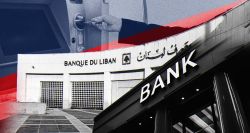
Gap Law: A Legalized Expropriation of Deposits

Wrapped in the technical language of financial restructuring, the Gap Law is presented as a necessary step to correct the imbalance of Lebanon’s banking system. Behind this rhetoric lies a far more serious reality: the legalization of a massive expropriation of bank deposits, in blatant disregard of property rights, legal certainty, and the very ...

The Law of Financial “Massacre”: When Nawaf Salam and “Kulluna Irada” Strip Depositors of Their Savings

At one of the darkest moments in Lebanon’s national life, Prime Minister Nawaf Salam is promoting a so-called “financial gap law” as a technical solution, while in reality it legalizes suffering and formalizes the confiscation of Lebanese citizens’ savings. The so-called “Kulluna Irada” law does not merely steal money; it also ...

Association of Banks Criticizes Draft Gap Law

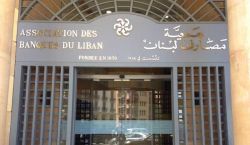
The Association of Banks in Lebanon addressed an open letter to the three presidents, as well as to all Lebanese citizens—particularly depositors—in which it expressed its opposition to the contents of the draft law on the financial gap, whose ninth version was recently leaked. The Association said that “the draft contains serious ...

When the IMF’s Agenda Takes Over Decision-Making, Depositors Foot the Bill

A cautiously tense meeting brought together Finance Minister Yassine Jaber and a delegation from the Association of Banks in Lebanon (ABL), dedicated to discussing the points related to the Financial Gap Law. The talks focused on how the banks, the Lebanese state, and the Central Bank would handle the existing gap and on reassessing the banks’ ...

Farah: The State Bears Full Responsibility for the Misuse of Public Funds

Lebanese economist and columnist Antoine Farah told Huna Lubnan that the Lebanese state bears full responsibility for the misuse of public funds both before and after the financial crisis, noting that what was once unclear prior to the 2019 collapse has now become indisputable. Farah argued that the state, working hand-in-hand with the ...

Sebastian Gorka’s Visit and Lebanon’s Financial Crossroads

The Senior Director for Counterterrorism Sebastian Gorka’s visit to Lebanon over the past two days has added an unexpected but timely dimension to the country’s search for economic and political stability. His meetings with local officials and policy advisors reportedly centered on policies to cut off ...

When Samir Hammoud Sacrifices Depositors to Please the IMF

Negotiation skills refer to the capacities and methods used by an individual when engaging in discussions with another party in order to reach an agreement that satisfies both sides, without sacrificing the rights or interests of either. Key negotiation skills include planning, managing expectations, persuasion, problem-solving, decision-making, ...

A Financial Gap Law That Writes Off Deposits and Submits to the IMF

In appearance, Finance Minister Yassin Jaber sought to present his meeting with the Association of Banks in Lebanon (ABL) delegation at the Ministry of Finance as a broad, constructive session that projected an image of consensus. His public remarks reinforced this impression, suggesting that both sides—the ministry and the banks—were aligned ...

BDL Leads Financial Recovery and Reassures Depositors

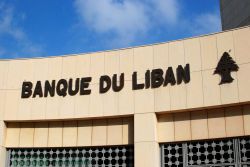
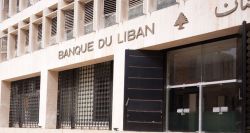
At a luncheon debate hosted by the École supérieure des affaires (ESA), Karim Souhaid, the Governor of Lebanon’s Central Bank (BDL), presented his assessment of the country’s economic situation – “slowly but surely moving in the right direction” – to around 40 members of the Mouvement des entreprises de France (MEDEF), currently on ...

New Banknotes to Boost the Lebanese Pound

Issuing higher-denomination banknotes for the Lebanese pound is simply common sense, given that the largest note currently in circulation is LBP 100,000—worth about USD 1. The others are worth even less: LBP 50,000 (roughly USD 0.50), LBP 20,000, LBP 10,000, and LBP 5,000. Lebanon has been in the grip of a currency collapse for six years, with ...