- Home
- Middle East
- Israel Won the War, So Why Is the Muslim Brotherhood Winning the Peace?
- 13:00
Op-edIsrael Won the War, So Why Is the Muslim Brotherhood Winning the Peace?
Read : 4 minute(s) A A A
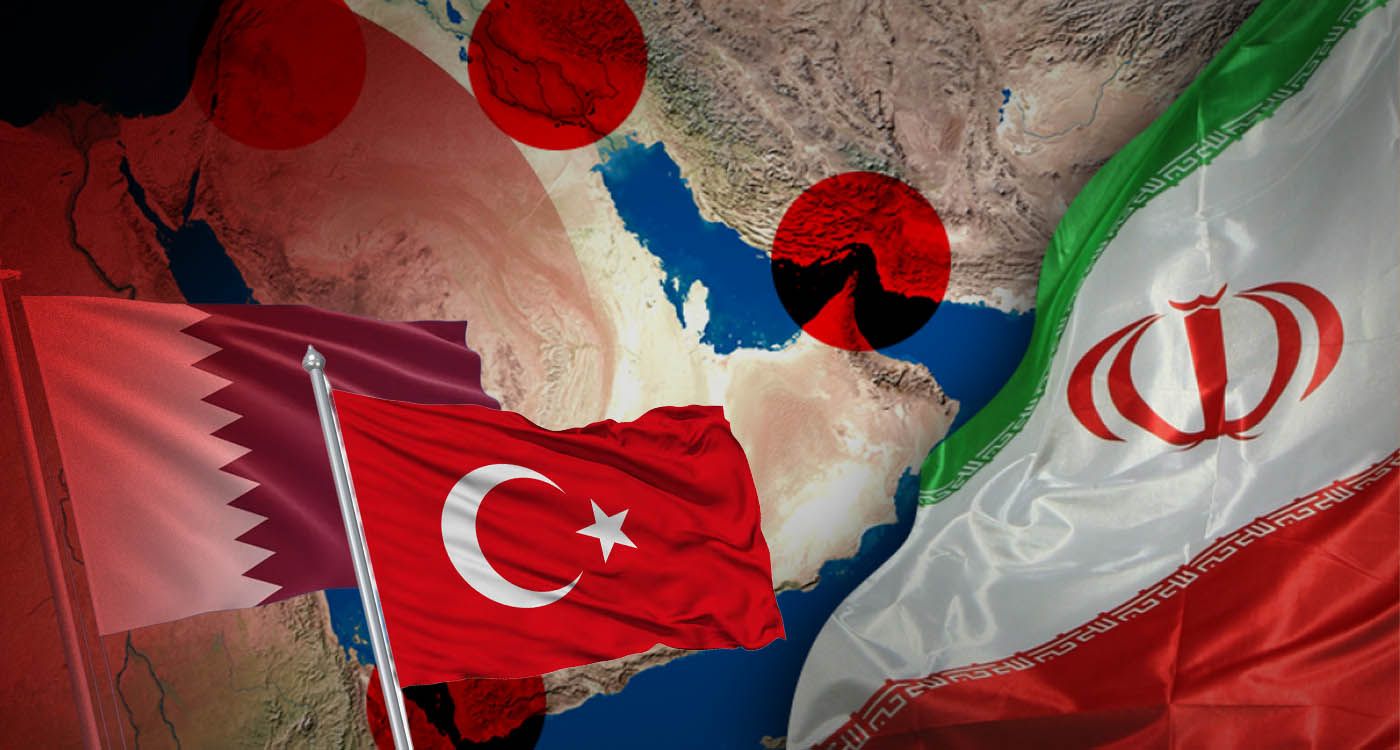
The new regional order taking shape appears to be a haunting inversion of the post-9/11 era. At the time, the U.S. smashed Sunni powers, the Taliban and Saddam Hussein, incidentally empowering Iran and its sprawling proxy network. Washington even called Shia Islamism the more “reasonable” alternative and partnered with Tehran against Sunni jihadists. Today, Washington is poised to make a similar mistake.
Hamas’s October 7 massacres of at least 1,200 Israelis shattered illusions about the rationality of Iran’s so-called “Axis of Resistance,” and spurred Jerusalem to deliver crushing blows to Tehran and its proxies. Having witnessed the destruction of the Shia axis, Washington is betting on the Muslim Brotherhood as a "moderate" counterweight. Sunni jihadis, turbocharged by Qatar’s soft power, are now rushing to fill the regional power void.
The collapse of the Iranian-led Shia Islamist order has been swift. In Lebanon, Hezbollah's diminished influence opened doors for the new government, which has yet to grasp the opportunity. In Syria, the fall of the Assad regime in late 2024—starved of Iranian support—led to a rapid takeover by Islamist forces led by Ahmad al-Sharaa. While Sharaa has traded his fatigues for business suits and rebranded his movement as a technocratic administration, his group’s jihadist DNA casts a shadow over Syria and the region.
Ideally, the collapse of Iran’s proxy network should have strengthened the Abraham Accords, with the United Arab Emirates, Bahrain, and Morocco having already provided the blueprint for normalization with Israel, pragmatic governance, and economic modernization. Yet, the post-war reality has tilted toward a repackaged version of radical Sunni jihadism.
Qatar and Turkey have been the architects of this shift. Leveraging its vast natural gas wealth, Doha has funneled tens of billions into regional influence, positioning itself as the indispensable mediator and financier of the new Levant.
In Syria, Qatar and Turkey have emerged as the primary backers of the Sharaa government, providing debt settlements and infrastructure investment that have effectively bought the new regime’s legitimacy. While the West has offered sanctions relief in the name of humanitarian stability, it has inadvertently subsidized the rise of an Islamist-leaning state.
In Gaza, the dynamic is equally perilous. Qatar and Turkey have successfully redirected the international discourse from "disarmament" to "reconstruction." Billions in aid, ostensibly for civilian welfare, are flowing through networks that critics argue sustain the very Muslim Brotherhood ideology that birthed Hamas.
In Lebanon, while the government fails to disarm Shia Hezbollah, the Sunni loyalists of Sharaa are surging. Civil war is brewing as the Lebanese state continues going in circles.
Sharaa in Syria and Muslim Brotherhood affiliates in Sudan, Somalia, and Yemen are performing a masterclass in "taqiyya," feigning moderation to secure Western aid and diplomatic recognition while consolidating Islamist control locally.
Once entrenched, these groups will inevitably revert to their true aims. Their core ideology remains fundamentally incompatible with the existence of a Jewish state or Western liberal influence.
By embracing Turkey and Qatar’s vision for the region, the U.S. is enabling a rollback of the progress made by the Abraham Accords. Even in Saudi Arabia, where modernization has been the watchword, the creeping influence of a triumphant Sunni Islamist bloc has blocked the drive toward normalization. Saudi press and social media are now on an all-out campaign against both the U.S. and Israel.
Washington must reverse course before the Muslim Brotherhood’s "peace" becomes as deadly as Hamas’s war. The U.S. should treat the emerging Muslim Brotherhood sphere of power as a strategic threat comparable to the Iranian axis.
Support must be redirected exclusively to non-Islamist governments, and reconstruction aid must be conditioned on the absolute disarmament of militant groups and a formal rejection of Brotherhood ideology.
Israel’s battlefield victories have provided a rare, historic opportunity to cleanse the region of extremist vetoes. If the U.S. allows Qatar and Turkey to fill the void with "Islamism Lite," Washington will soon find that it has merely traded one existential threat for another. Only by championing the pragmatic, inclusive model of the Abraham Accords can the Middle East finally achieve a lasting peace.
Read more
Comments