- Home
- Middle East
- Israel Pushes Back as Trump Unveils ‘Board of Peace’
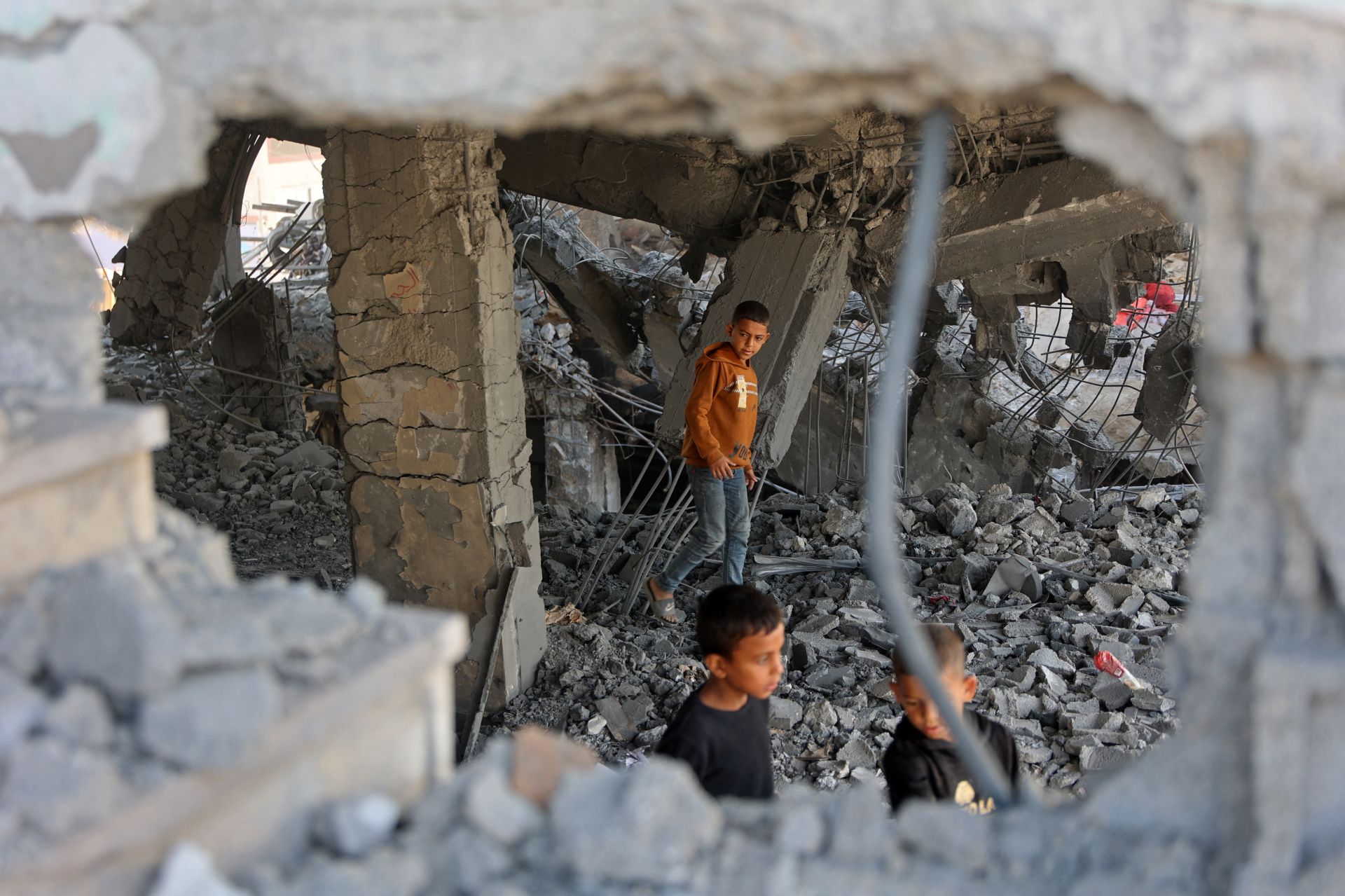
Palestinian boys walk amid the debris of a damaged building belonging to the Ministry of Religious Affairs, which had been sheltering displaced people, in Gaza City’s Zeitoun neighborhood, on November 20, 2025, a day after it was struck in an Israeli military bombardment. ©YURIY DYACHYSHYN/AFP
Israeli Finance Minister Bezalel Smotrich sharply criticized President Donald Trump’s proposed plan for Gaza on Monday, calling it “bad for Israel” and urging a full reoccupation of the enclave.
Reportedly, as Washington promotes a post-war governance plan for Gaza, Israel has been signaling resistance not only diplomatically but also militarily, launching fresh operations in the occupied West Bank, underscoring the widening gap between political initiatives and realities on the ground.
The White House’s announcement of a new international body to oversee Gaza’s administration and reconstruction has triggered immediate political friction with Israel, exposing early fault lines in President Donald Trump’s attempt to shape the enclave’s post-war future.
But the disagreement is unfolding against a backdrop of continued Israeli military escalation, highlighting a deeper contradiction between diplomatic planning and ongoing security operations.
Israel Objects and Moves Militarily
Speaking at an event marking the recognition of a new settlement in the occupied West Bank, Smotrich argued that Israel cannot “wait another 20 years” to assert control over Gaza, calling for the imposition of Israeli military rule, the destruction of Hamas, and permanent Israeli presence in the territory, remarks that underscore deep divisions within Israel’s leadership over Gaza’s future as Washington advances its post-war governance initiative.
Hours after Washington unveiled the so-called “Board of Peace”, Israel confirmed it had not been consulted on key aspects of the initiative, particularly the formation of a Gaza Executive Board tasked with day-to-day governance through a Palestinian technocratic body.
Prime Minister Benjamin Netanyahu ordered Israel’s foreign minister to raise the issue directly with U.S. Secretary of State Marco Rubio, saying the move ran counter to Israeli policy regarding Gaza’s future.
At the same time, Israeli forces launched what the army described as a “wide military operation” in the West Bank city of Hebron, signaling that Israel’s security-first approach remains firmly in place. According to an army statement, the multi-day operation, conducted with the Shin Bet and Border Police, aims to dismantle what Israel calls “resistance infrastructure” and eliminate weapons possession in the Jabal Johar neighborhood.
The operation comes amid an intensified campaign of arrests across the West Bank. Palestinian detainee advocacy groups say Israeli forces detained and conducted field interrogations of at least 50 Palestinians overnight, with operations concentrated in the town of al-Shuyukh in Hebron governorate and Kafr Ra’i near Jenin. Palestinian officials estimate that more than 9,300 Palestinians are currently held in Israeli prisons, including dozens of women and hundreds of minors.
Gaza Governance Plan Faces Resistance
The Board of Peace is presented by the Trump administration as part of a broader 20-point roadmap aimed at ending the war in Gaza and replacing Hamas-led governance with an interim international and Palestinian technocratic structure.
Under the plan, a Founding Executive Board, chaired permanently by Trump, would oversee foreign relations and investment, while a Gaza-focused executive body would supervise the National Committee for the Administration of Gaza (NCAG), led by former Palestinian Deputy Planning Minister Ali Shaath.
Former UK Prime Minister Tony Blair, a member of the founding board, welcomed the initiative, saying it could offer Gazans “a future different from the past” while addressing Israeli security concerns. Hamas, while not committing to disarmament, said it would facilitate the handover process to the independent committee.
Yet Israel’s objections, combined with its continued military actions, raise questions about how much autonomy or authority any new Gaza administration would realistically have.
A Divided International Response
Washington has extended invitations to roughly 60 countries to participate in the initiative, including regional powers such as Turkey, Egypt, Jordan, Pakistan, and India, alongside Canada, Argentina, and several European states. Hungary has confirmed its participation.
However, diplomats say most European Union countries are expected to decline, citing concerns that the initiative could undermine UN-led efforts and centralize power in Washington. A draft charter circulating among diplomats includes provisions allowing lifetime membership in exchange for a $1 billion contribution, further fueling skepticism.
Russia and Ukraine have reportedly received invitations as well, though analysts consider Russian participation unlikely.
A Plan Tested by Events
President Trump described the Board of Peace as the most ambitious conflict-resolution body ever assembled. Yet Israel’s resistance, Europe’s reluctance, and the expansion of military operations in both Gaza and the West Bank suggest the initiative faces significant obstacles.
As political blueprints multiply in Washington and foreign capitals, developments on the ground, from Hebron to Gaza, continue to shape realities that diplomacy alone may struggle to contain.
U.S. Driven Approach
By placing itself at the center of Gaza’s future governance, Washington is signaling a shift away from UN-led frameworks toward a more centralized, U.S.-driven approach. Yet key questions remain unresolved: whether Hamas will disarm, who will control security on the ground, and whether Israel will accept an international or Palestinian authority it does not fully control. Israel’s objections to the plan, combined with ongoing military operations in Gaza and the West Bank, highlight the growing gap between diplomatic initiatives and realities on the ground.
Read more



Comments