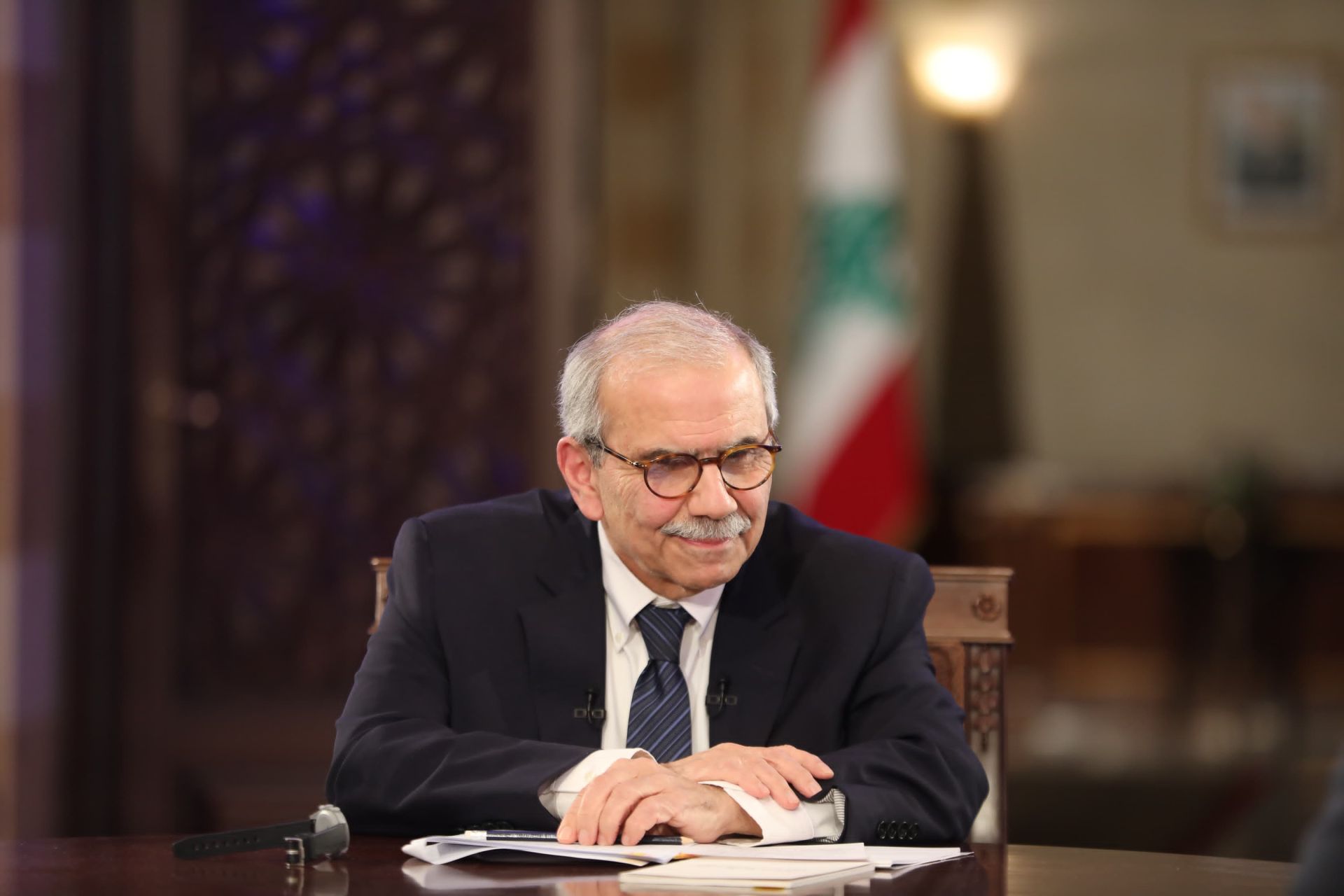
The following article, originally written on Thursday by Lebanon Debate, is reproduced here in full to highlight their analysis of the proposed financial gap bill and its potential impact on depositors and the Lebanese banking sector:
“Once again, Nawaf Salam’s government is rushing to pass the financial gap law before the end of the year, yielding to external pressures while neglecting its responsibility to embed the law in a comprehensive economic recovery plan that restores depositors’ rights and revives the economy, rather than treating it as a mere technical fix for the banking crisis.
The approach taken by Salam, his government, and Finance minister Yassin Jaber reveals a highly dangerous political and financial maneuver. It is designed to shift losses in a way that absolves the state while placing the heaviest burden on banks and depositors, under broad claims that collapse under close scrutiny of the legal text.
Jaber promotes the narrative that the state will contribute significant funds and that the bill ensures repayment of 85% of deposits, with the remaining 15% spread over installments. In reality, the draft law tells a very different story. There is no clear financial commitment from the state, no tangible figures, and no provision holding the Treasury or the Lebanese Central Bank (BDL) directly accountable for restoring deposits.
Lebanon is not facing a contained banking crisis, nor is this the result of the failure of a single bank or a small group of banks. This is a full-blown systemic financial crisis, driven by decades of state policies, mismanagement at BDL, and a total collapse of governance and transparency.
At its core, the crisis stems from deep structural issues, including decades of political instability, chronic budget deficits, unsustainable public debt, a long-standing fixed exchange rate system, and the repeated failure of successive governments to address fundamental structural problems, culminating in the default on Eurobonds.
This raises a fundamental question: how can a state that played a central role in creating this collapse now present itself as neutral, while expecting banks and depositors to bear the entire cost?
Article 9 of the draft law is a striking example of this approach. Its vague wording neither specifies any state contribution to deposit repayment nor clearly addresses the BDL recapitalization, despite Article 113 of the Code of Money and Credit explicitly obliging the state to cover BDL’s losses. This raises serious questions about whether the ambiguity is deliberate and intended to impose new realities through the force of law.
Regarding deposits, the draft law lays out a shocking plan that would inflict massive losses on depositors. It proposes writing off around 35 billion dollars of their funds, including interest and deposits converted from Lebanese pounds to dollars at a rate of LBP 1,500, labeling them as irregular transactions. Repayment would be capped at 100,000 dollars per depositor based on total deposits across the entire banking sector, not per bank, and spread over four years. The remaining amounts would be converted into BDL bonds maturing in 10, 15, or 20 years.
Given these provisions, one must ask where the promised 85% restoration is and what financial or legal rationale supports framing this scheme as protection for depositors when it actually amounts to asset write-offs, mandatory installment plans, and prolonged freezes without any real guarantees.
The most alarming aspect of the draft law is that it places the entire burden of losses on banks, effectively bankrupting them and wiping out their capital, leaving them unable to return depositors’ funds. Banks would be reduced to financially crippled entities, only holding what remains of their liquidity and frozen deposits at BDL. Meanwhile, the state acts as a passive bystander, and BDL is limited to issuing long-term bonds, as if the crisis had never resulted from public policies and sovereign decisions.
In this sense, the financial gap bill does not resolve the crisis. It legislatively reproduces it, setting the stage for a new confrontation with depositors, whose costs would bear the brunt of the collapse while the state is absolved of any financial or legal responsibility.
Postponing the bill has therefore become an urgent necessity. This would allow time for transparent and constructive negotiations among all parties, prioritizing the restoration of deposits and ensuring that the state and BDL assume a substantial share of the losses as part of a comprehensive recovery plan that rebuilds trust and protects what remains of the banking sector.
Under the current draft, the outcome is inevitable. The state defaults without bearing any real cost, BDL retains assets estimated at around 60 billion dollars including gold, the banking sector becomes bankrupt, deposits are lost, and any path to genuine economic recovery is closed.”



Comments