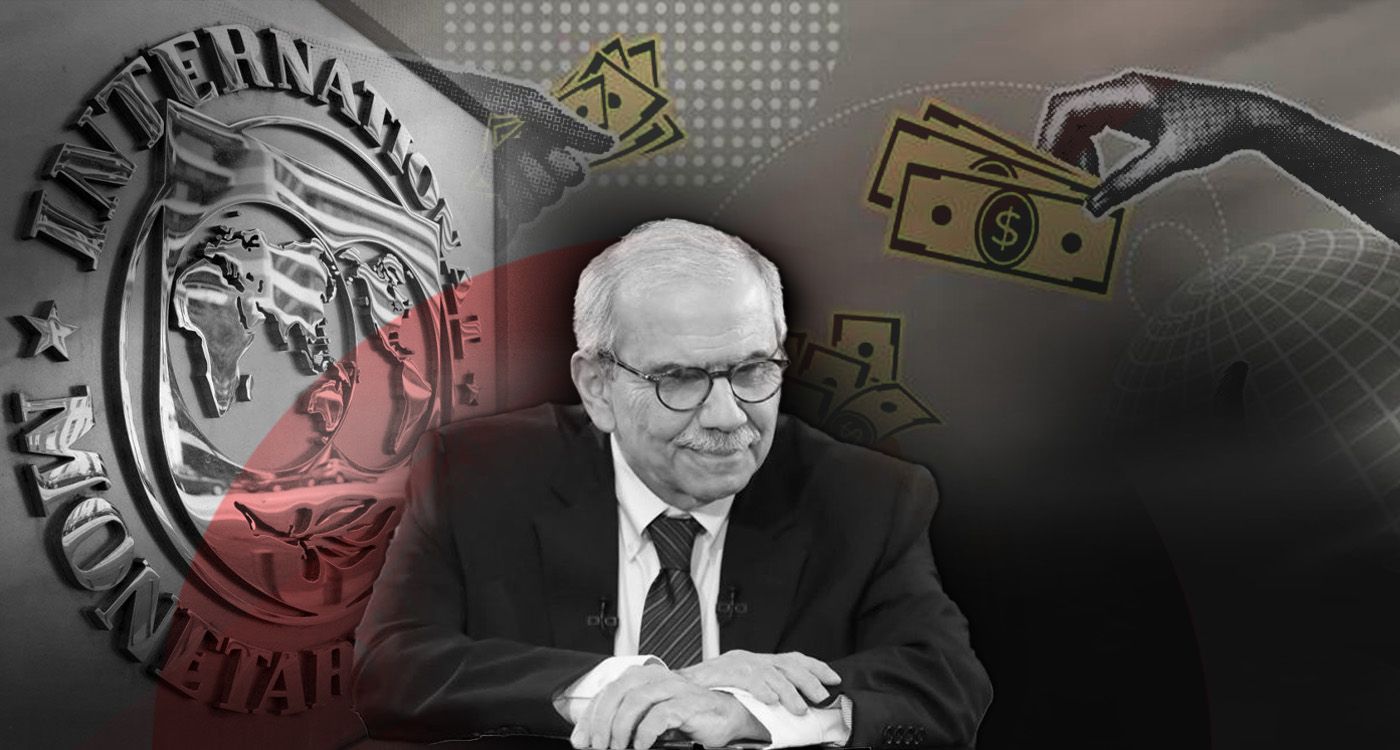
By claiming on Monday a commitment to “deliver justice to depositors,” Prime Minister Nawaf Salam did more than distort reality: with the active backing of the International Monetary Fund (IMF), he sealed one of the greatest financial and moral abdications in Lebanon’s history. The Gap Law, presented as a lifesaving legal framework, is in fact the culmination of a coordinated strategy aimed at erasing public debt, liquidating deposits, and sacrificing the banking system in the name of a technocratic orthodoxy disconnected from any notion of social justice.
Conditional Justice Dictated by the IMF
Nawaf Salam’s flagship promise—to fully restore deposits below $100,000 over four years—rests on a key formula that exposes the deception: “within the limits of available resources.” This clause, directly inspired by IMF prescriptions, strips the concept of justice of any legal substance. It turns a fundamental right into a conditional favor, subordinate to a state that the IMF itself acknowledges as insolvent.
Far from defending depositors, the IMF has imposed an approach that begins by removing the Lebanese State from the chain of responsibility, even though it is the system’s primary debtor after decades of deficits, borrowing, and the capture of Banque du Liban’s resources. By endorsing this logic, Nawaf Salam does not assume responsibility—he erases it.
“Bonds” to Disguise Confiscation
The treatment reserved for small and medium depositors illustrates the brutality of the IMF–government scheme. They would be handed “tradable bonds,” presented as restitution with no haircut on the principal. In reality, this is a fictitious financial instrument: not guaranteed by the State, not backed by real assets, and not anchored in any credible repayment schedule.
This solution, directly inspired by the IMF’s standard playbook in failed states, is not designed to repay depositors but to remove them from balance sheets. It converts a certain claim into an abstract promise, transferable only on paper and destined to lose its value in a nonexistent market.
The Programmed Erasure of Public Debt
The ideological core of the Gap Law—and of the IMF’s dogma—lies in the discreet but total erasure of the state’s debt. By liquidating banks and neutralizing Banque du Liban, the Salam government executes the politically easiest solution: make the creditor disappear in order to make the debt disappear.
This approach violates the most basic principles of sovereign responsibility. It establishes a dangerous precedent: a state can squander, borrow, and confiscate—and then absolve itself by declaring general insolvency. The IMF, which claims to promote fiscal discipline, becomes here the guarantor of institutional impunity.
Liquidating the Banking System as Doctrine
Under the guise of a “comprehensive legal framework,” the Gap Law implements the methodical liquidation of Lebanon’s banking sector. With the IMF’s blessing, the government of Nawaf Salam—supported by Finance Minister Yassine Jaber, Economy Minister Amer Bsat, and BDL Governor Karim Souhaid—chooses scorched earth over restructuring.
There is no serious recapitalization, no continuity plan, and no genuine compliance with international bank resolution standards. The IMF, quick to invoke the European BRRD directive or Basel Committee principles elsewhere, accepts in Lebanon an approach it would never dare impose on a state with solid institutions.
An IMF at Odds with Its Own Standards
Revealingly, even the IMF’s technical observations on the Gap Law acknowledge serious flaws: the absence of a clear loss hierarchy, the dilution of public responsibility, and major systemic risks. Yet these reservations carry no political consequences. The IMF validates the framework while admitting its structural injustice.
This double discourse exposes the truth: Lebanon is being used as a laboratory for crisis financial engineering, where the priority is neither justice nor economic recovery, but the accounting closure of a file that has become inconvenient.
A Moral Shipwreck Under the Guise of Reform
By invoking transparency, justice, and integrity, Nawaf Salam seeks to cloak with moral legitimacy a law dictated by an international institution that has turned austerity and the socialization of losses into dogma. The Gap Law protects neither social stability nor the middle class; it formalizes their disappearance.
This project is not a courageous reform. It is a political surrender to the IMF and a deliberate abandonment of citizens. Lebanon is not entering a new phase; it is legally enshrining the spoliation of its people—with the blessing of those who claim to be saving it.


Comments