- 18
- Dec.
- 2025

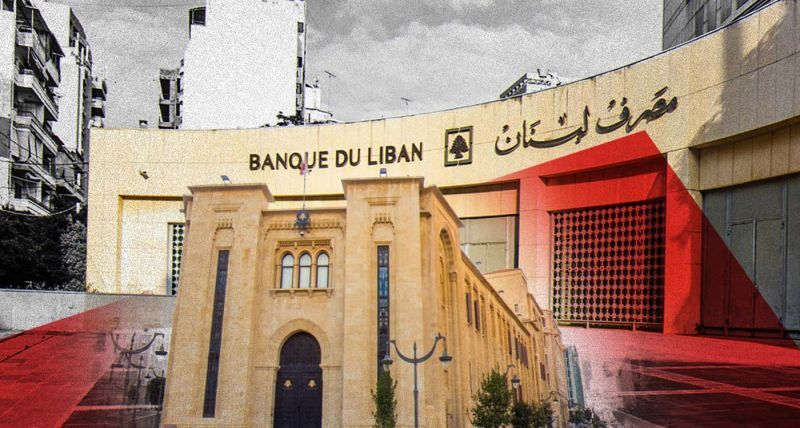
For several months now, the so-called “Gap Law” (law on financial gap) has been presented as the key to resolving Lebanon’s banking crisis. Its proponents argue that it would help restore order to the financial system and pave the way for an agreement with the International Monetary Fund (IMF).
But behind this technical vocabulary lies a far simpler question: will this law actually allow depositors to recover their money, or will it formalize losses that have already been incurred since the 2019 financial crisis?
A Financial Hole of More Than $70 Billion
The starting point of the Gap Law is the “financial gap”: the difference between what banks owe depositors and what they are actually able to repay. According to the government’s initial estimates, this gap already stood at around $70 billion, a figure that has likely increased after six years of unresolved crisis.
For former economy minister Alain Hakim, the purpose of the law is clear:
“The Gap Law is supposed to establish a legal framework to distribute losses among the various actors in Lebanon’s crisis: the state, the Banque du Liban, commercial banks and, indirectly, depositors.”
In other words, this is not an economic recovery plan, but a text designed to legally organize a systemic failure, aimed at “diluting a systemic crisis as quickly as possible in order to present a positive balance sheet to the IMF.”
A Loss-Sharing Law, not a Repayment Law
Contrary to political rhetoric, the Gap Law does not create money. Its purpose is to formally recognize losses and decide how they will be allocated. According to Alain Hakim, a credible law should rest on two pillars: “the accounting recognition of losses already incurred, and a genuine mechanism for repaying deposits.” Yet neither pillar is clearly defined.
Figures highlight the scale of the challenge. According to economist Nassib Ghobril, available liquidity stands at around $14.2 billion. This falls short of the roughly $22 billion needed to repay deposits under $100,000.
Under the (leaked) ninth version of the draft law, deposits up to $100,000 would be repaid in cash over four years, without any clearly identified source of funding. Beyond that threshold, depositors would receive Banque du Liban bonds yielding 2%, repayable over 10, 15 or 20 years depending on the tranche. According to Nassib Ghobril, chief economist at Byblos Bank, the question is: “How will the central bank have the liquidity to repay in 10, 15 or 20 years? That remains unclear.”
The State on the Sidelines and Banks Under Pressure
The government’s guiding principle is that the state should not contribute directly to filling the financial gap. For Alain Hakim, this approach is deeply problematic:
“Without budgetary participation by the state, which bears primary responsibility for the disaster through excessive borrowing, the burden of restructuring is automatically shifted onto banks and depositors.”
Banks’ claims on the Banque du Liban largely consist of customer funds. Article 13 of the Code of Money and Credit stipulates that these placements constitute legal commercial obligations. Therefore, any devaluation amounts to an indirect confiscation of savings, under the guise of balance-sheet rebalancing.
Risk of Bank Failures
“By projecting the extinction of bank capital without any recapitalization mechanism, the law pushes banks toward technical, and potentially actual, bankruptcies,” Alain Hakim warns. Nassib Ghobril concurs: “According to the ninth version of the draft law, yes, it could trigger bank failures.”
He notes that banks could have declared bankruptcy from the outset, leaving depositors with “crumbs.” “But banks did not choose this path,” he says. If the final law maintains its current provisions, some institutions may nonetheless reconsider this option.
In the context of ongoing political uncertainty, attracting new capital to recapitalize banks faces steep challenges. “Who would recapitalize today?” asks Alain Hakim, pointing in particular to the unresolved issue of Hezbollah’s weapons and continued political paralysis.
For him, improving the investment climate would require Lebanon to “align itself with the moderate Arab countries that are now moving toward a new, more comprehensive vision for the region.”
Gold: A Strategic Lever Left Untapped
The Banque du Liban’s gold reserves rose from $13.9 billion at the end of 2019 to $38.4 billion by the end of November 2024 solely due to rising global prices. Hakim rejects outright liquidation: “That would be an admission of structural failure.” Instead, he advocates using gold-backed financial instruments, which he believes could mobilize between $10 and $14 billion.
Nassib Ghobril goes further: “You can’t treat gold like a beautiful museum painting.” He proposes leveraging the $24.5 billion increase through repo operations (loans secured by gold) which could inject around $12 billion without selling the physical metal. A key argument: with total reserves (gold and foreign currency) equivalent to 119% of GDP, Lebanon holds the highest ratio in the world, ahead of Switzerland (100%).
Who Pays the Bill?
Behind the technical complexity lies a basic question: who pays? As long as the state refuses to contribute and banks claim they lack the means, depositors remain the adjustment variable.
As currently conceived, the Gap Law risks doing less to resolve the crisis than to make it legally acceptable without addressing its root causes: corruption, wasteful public spending, and the state’s lack of productivity.



Comments