Lebanon

Geagea: LF Ministers to Reject Financial Regularization Law

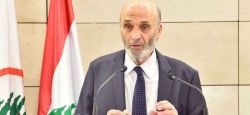
Chief of the Lebanese Forces (LF) party, Samir Geagea, confirmed on Tuesday that LF ministers will vote against the Financial Regularization Law in the Council of Ministers, citing its failure to return depositors’ funds. In his remarks at the Graduates’ Body dinner at the party headquarters in Maarab, Geagea said, “the criterion is simple: ...

IMF Reservations Fuel Dispute Over Financial Gap Law

Nidaa al-Watan reported Tuesday that controversy persists over the leaked draft Financial Gap Law, amid claims that the International Monetary Fund (IMF) is dissatisfied and has raised reservations. While the draft is expected to be circulated to ministers ahead of a possible Cabinet vote, political and diplomatic circles cited by the newspaper ...

Why was Sharaa Invited to Washington, but not Aoun?

Until late 2024, Syrian President Ahmad al-Sharaa was a U.S.-designated terrorist with a $10 million bounty on his head for leading the al-Qaeda-linked Hayat Tahrir al-Sham. By contrast, Lebanese President Joseph Aoun, who served as commander of the Lebanese Armed Forces (LAF) until his election in January 2025, was widely regarded as one of ...

Lebanon’s Cabinet Divided Over Controversial Financial Gap Law

The controversial financial Gap Law presented as key to resolving Lebanon’s enduring banking crisis that deprived depositors of their savings, topped discussions at Monday’s cabinet meeting, exposing differences among ministers.  The session, attended by Central Bank Governor Karim Souaid, was adjourned and will resume Tuesday to ...

Italy Says Wants Military to Stay in Lebanon After UN Peacekeepers Leave

Italy said Monday it intends to keep a military presence in Lebanon even after the UN peacekeeping force it belongs to leaves as planned on December 31, 2026. "Even after (the peacekeeping force) UNIFIL, Italy will continue to do its part, supporting with conviction the international presence and supporting the capacity development of the ...

Israeli Strike in Saida District Kills Three

Israel said Monday it launched a drone strike in Quneitra’s Saida district, targeting a car carrying what Israel said were Hezbollah operatives, killing three people.  One of the deceased is reportedly a Lebanese Army soldier. Israeli army spokesperson Avichay Adraee said in a post on X, “A short while ago, the Israel Defense ...

UNRWA in the Crosshairs: U.S. Weighs Unprecedented Sanctions

In the shadow of the Gaza conflict, a quiet but consequential debate is unfolding in Washington over whether the U.S. should designate the United Nations Relief and Works Agency (UNRWA) as a terrorist-affiliated entity and impose sweeping sanctions. A move once viewed as unthinkable is now the subject of urgent policy deliberations, with senior ...

Oliver Ojeil: London Fashion Film Festival Winner

On this episode of This Is Arts, film director and fashion photographer Oliver Ojeil talks about winning Best Story at the London Fashion Film Festival, storytelling through fashion photography, his work as a colorist on major productions like The Chosen, and his upcoming project starring L’Oréal ambassador Luma Grothe and Iacopo Ricciotti ...

US Senator Accuses Hamas and Hezbollah of Rearming

US Senator Lindsey Graham accused Hamas and Hezbollah of rearming during a visit to Israel on Sunday and charged that the Palestinian Islamist group was also consolidating power in Gaza. After two years of war between Israel and Hamas in the Palestinian territory, a fragile ceasefire has held since October, despite both sides trading accusations ...

The IMF Sets an Example Through Lebanese Depositors: Unpacking One the Most Dangerous Laws in the Country’s History

What the government presented as the ‘Financial Gap Law’ is not merely a piece of financial legislation; it is a text that lays the foundations for the post-adoption economic order. It does not conceal its objective but states it calmly: ending a crisis that has lasted for years instead of resolving it, writing off deposits instead of ...

Gap Law: The Programmed Destruction of the Banking Sector

Presented as a restructuring measure, the Gap Law organizes a methodical liquidation of the Lebanese banking sector. Behind complex technical mechanisms—loss hierarchy, balance-sheet cleanup, recapitalization—lies a clear political choice: to sacrifice banks to settle a public crisis that the state refuses to assume. This text does not reform ...