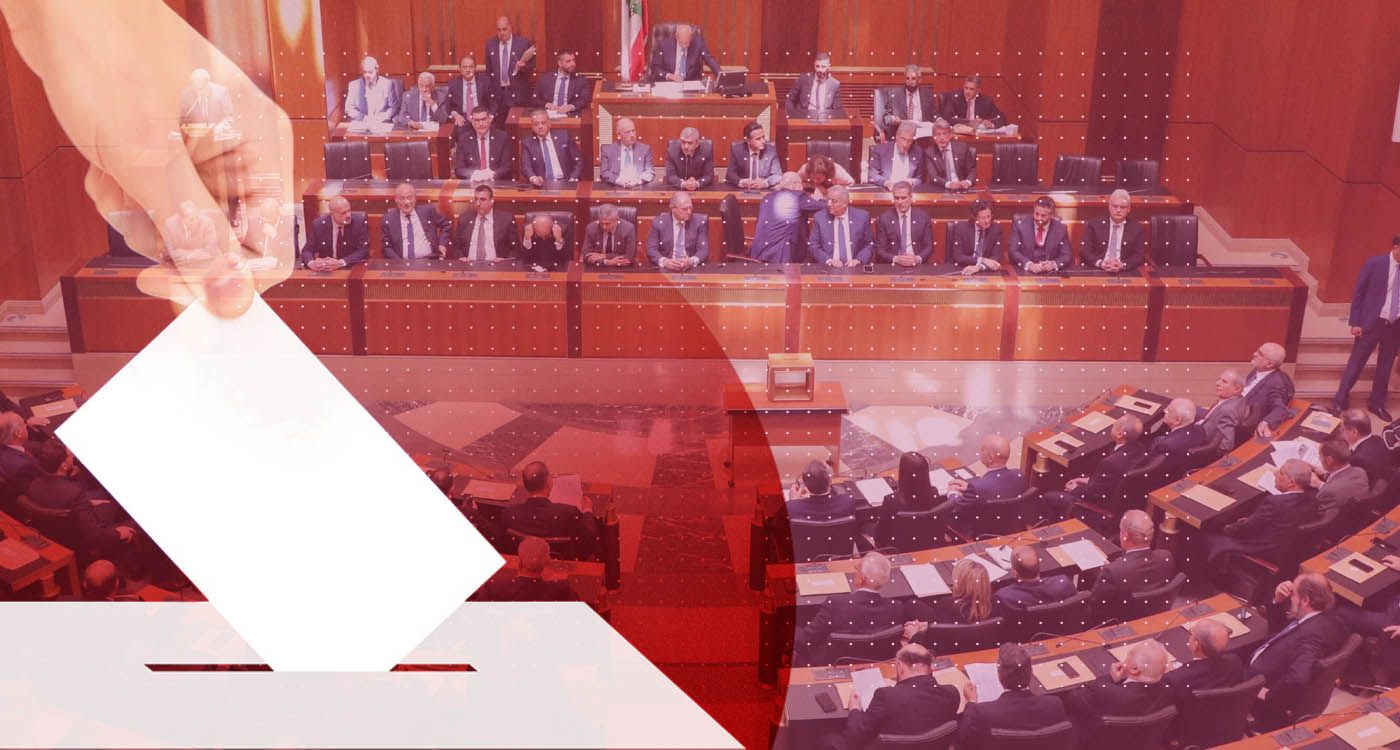
Lebanon’s parliamentary elections are officially scheduled for May, but an impasse over proposed changes to the electoral law has cast doubt on whether the vote will go ahead on time. While most parties have publicly committed to holding the vote as scheduled, the election date and key rules governing it have become bargaining chips in Lebanon’s political bazaar.
“Technically and logistically the [elections] can take place as scheduled under the existing law, despite its many flaws,” elections expert Nazih Darwish told This is Beirut.
“The sole reason for delaying the poll is purely political,” he added.
How Lebanese expatriates will vote has become the most politically sensitive fault line surrounding the elections. The upcoming parliamentary elections are governed by the 2017 electoral law, which stipulates the creation of six additional seats in parliament reserved for Lebanese casting ballots from abroad, a measure that has since gone unimplemented.
Parliament Speaker Nabih Berri, the head of the Amal Movement and an ally of Hezbollah, has refused to bring to a vote a proposed amendment to allow Lebanese abroad to vote in their district of origin, the system used in the 2018 and 2022 elections.
Hezbollah and the Free Patriotic Movement favor limiting diaspora voters to six districts, a move widely seen as benefiting them electorally. The Lebanese Forces, the Kataeb Party, and other groups, by contrast, support allowing expatriates to cast ballots across all 128 of Lebanon’s electoral districts, which would deliver these parties key votes in several highly-contested districts.
The parliamentary split over expatriate voting has paralyzed the legislature, explained Information International researcher Mohammad Chamseddine, who added that the political crisis can only be resolved through a broad consensus.
Analysts interviewed by This is Beirut forecast three scenarios for the parliamentary elections: holding them on schedule, a limited technical postponement of a few weeks, or the controversial choice of far lengthier delay.
Darwish explained that a possible settlement could include eliminating diaspora voting altogether, and instead delay the elections until the summer tourism season to allow expatriates to return to Lebanon to vote, as was done in the 2009 elections.
Then, an estimated 48,000 diaspora voters flew into Lebanon to cast their ballots, with political parties reportedly paying for their airfare or chartering planes. A repeat of this system, however, would deny political representation for Lebanon’s expatriates—whose numbers have surged since the 2019 economic crisis—unable to return home.
If faced with an insurmountable deadlock on the elections, political parties could agree to extend the mandate of the current parliament, pushing back the elections for a year or more. In May 2013, parliament first extended its term until November 2014, then continued to do so repeatedly until the 2018 elections, ostensibly citing security concerns, while mired in a paralyzing political deadlock.
“This is the most controversial and least legitimate option, likely triggering domestic backlash and international pressure,” said Imad Salamey, political science professor at the Lebanese American University.
“The most likely scenario is a technical postponement, justified by security, logistical, or unresolved legal issues, notably expatriate voting,” he added.
Electoral calculations are likely to push politicians to avoid a lengthy delay, according to analysts. “The Lebanese Forces believe holding the elections on time could translate into tangible parliamentary gains,” Salamey said.
A postponement would also undermine President Joseph Aoun, who, since being elected to office in December 2024, has attempted to push through an agenda of reforms and Hezbollah’s disarmament. For Darwish, missing the election deadline would tarnish Aoun’s new mandate, and shake Lebanese hope for positive change.
Postponement – despite constitutional deadlines - could jeopardize Hezbollah’s calculations and boost the group’s opponents. Some analysts believe that Hezbollah’s weakening after the war and the elimination of its top leadership would likely have only a limited direct impact on its core electoral results. “Having an armed or disarmed Hezbollah would not affect the poll’s results immediately,” Darwish said.
Meanwhile, Salamey contended that “Hezbollah, despite its post-war weakening, calculates that it can still mobilize and preserve its core base while quietly fearing that delay would allow popular resentment, economic collapse, and security fatigue to further erode its standing.”
For Salamey, the more consequential effect would be indirect, including diminished authority over allies and reduced capacity to shape national coalitions. “The erosion of Hezbollah’s military and organizational standing would translate less into immediate parliamentary collapse and more into a gradual contraction of its broader political influence,” he said.
If postponing the elections is not accompanied by disarmament efforts, no one should expect major changes in the next parliament. However, if Lebanon moves forward with disarmament north of Litani, Hezbollah’s narrative would be drastically weakened, and this could be translated into shifts in voters and alliances, and eventually in the next parliament.


Comments