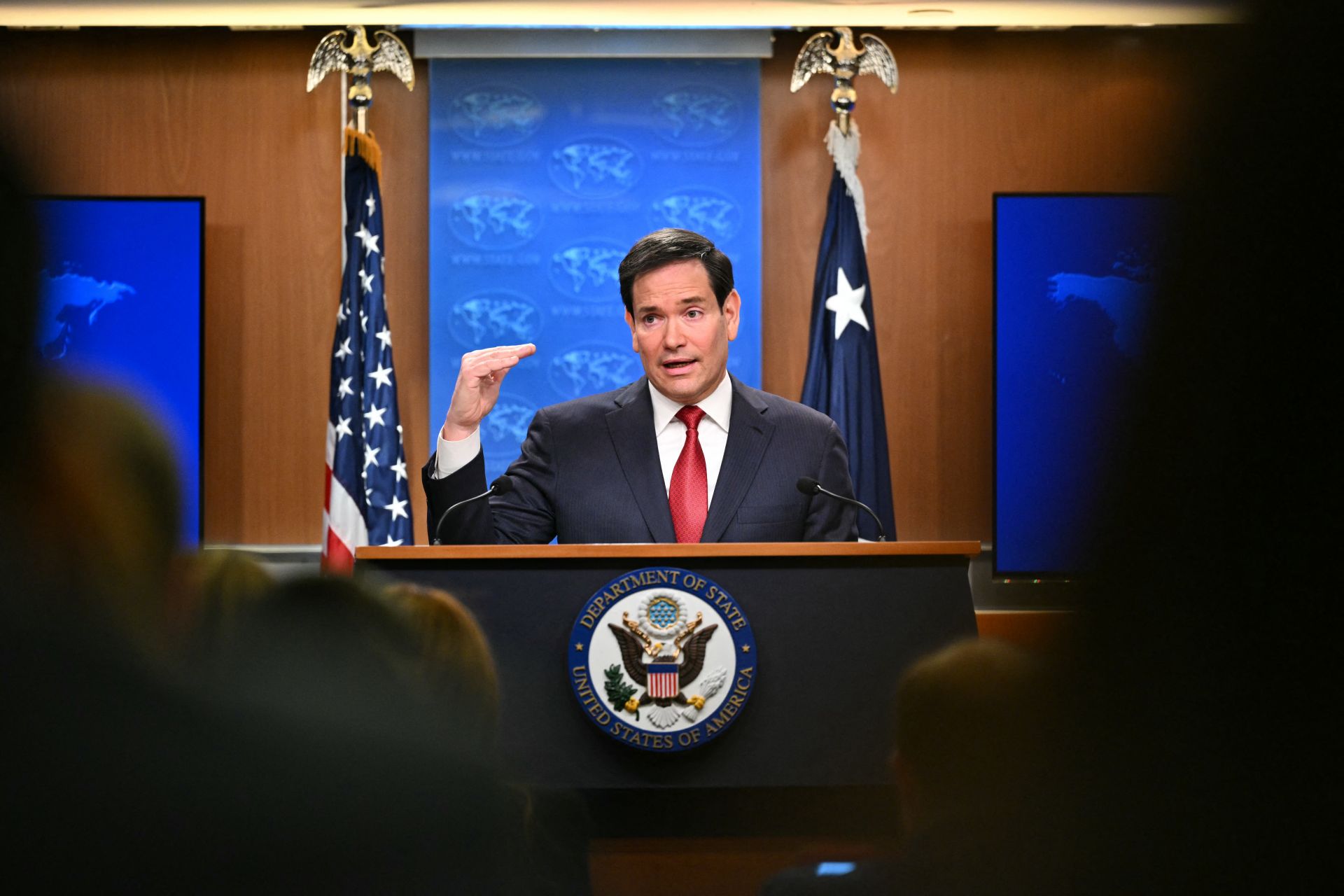
Secretary of State Marco Rubio announced Sunday that Hezbollah will no longer have operations in Venezuela after elite U.S. forces captured wanted narco-terrorist and former Venezuelan leader Nicolás Maduro in Caracas.
Speaking on CBS' "Face the Nation," Rubio said, "It's very simple, OK? In the 21st century, under the Trump administration, we are not going to have a country like Venezuela in our own hemisphere, in the sphere of control and the crossroads for Hezbollah, for Iran and for every other malign influence in the world. That's just not gonna exist." He also told NBC's "Meet the Press" that, in regard to Venezuela, that meant, "No more Iran/Hezbollah presence there."
Tehran Responds
Despite Rubio’s warning, Iran said on Monday that its relations with close ally Venezuela remain unchanged. "Our relations with all countries, including Venezuela, are based on mutual respect and will remain so," Iranian Foreign Ministry spokesperson Esmail Baqaei said at a press conference.
Baqaei also called for the release of Maduro and his wife and described the U.S. operation as an “illegal act.” He said, "As the Venezuelan people have emphasised, their president must be released.”
Hezbollah’s Operations Across Venezuela
Hezbollah maintains a significant presence throughout Venezuela. Reportedly, the militant group uses parts of the country as a logistical hub for activities ranging from financial operations to intelligence gathering and alleged narcotics trafficking.
Additional public reporting suggests Venezuelan cooperation with Iranian and Hezbollah-linked operations targeting Iranian dissidents abroad, including attempted kidnappings and intimidation campaigns in the Western Hemisphere.
The Maduro regime also provided a safe haven for Hezbollah fighters. In October 2025, former U.S. Treasury official Marshall Billingslea testified that Caracas issued thousands of Venezuelan passports and other documents to individuals with suspected Hezbollah ties, facilitating their travel and operations across the region, and has allowed unlawful financing and trafficking routes to persist under government control.
The former Treasury official also claimed that Venezuela allowed Hezbollah to establish a paramilitary training center on Margarita Island and awarded contracts to front companies connected to the group as early as 2001. He warned that this collaboration has intensified since Maduro took power.
Taking advantage of the lack of rule of law in Venezuela and parts of Latin America, Hezbollah engaged in money laundering connected to the drug trade.
Origins and Iranian Ties
The origins of the militant group’s presence in the country date back to the mid-1980s, when the organization began recruiting members from segments of the local Lebanese diaspora that migrated there following Lebanon’s civil war.
Since Maduro’s predecessor, Hugo Chávez, came to power in 1999, relations between Tehran and Caracas tightened significantly. Chávez cultivated close ties with Iranian leaders, including visits and mutual honors, and embraced Tehran as an ally against Western influence, supporting Iran’s nuclear program and initiating numerous joint economic, industrial, and infrastructure agreements in the 2000s.
Under Chávez and later Nicolás Maduro, the two governments signed hundreds of accords covering oil, finance, technology, and trade, and even established direct flights and joint banking initiatives to deepen bilateral engagement. Their alliance came to be known as an “axis of unity” opposing U.S. hegemony. Venezuelan officials even went so far as to openly thank Iran for helping Caracas mitigate sanctions impacts.
By the 2010s, Hezbollah’s presence in Venezuela was widely described by U.S. authorities as part of a transnational support and financing network.
Beirut Responds
Hezbollah unleashed a harsh response to the U.S. operation, claiming it "condemns the terrorist aggression and American thuggery against the Bolivarian Republic of Venezuela" and "further affirms its full solidarity with Venezuela — its people, presidency and government — in confronting this American aggression and arrogance."
The militant group’s reaction reflects its growing fear and the recognition that it may soon confront unprecedented pressure too.
Lebanese Forces parliamentarian Ziad Hawat, stated in a televised interview that what has occurred in Venezuela is reminiscent of the aftermath of September 11, 2001, marked by the dominance of a single American actor. He added that Trump will proceed with the Iran, Syria, and Gaza files, and that the repercussions for Lebanon and the world will be significant. He stressed that the new realities must be addressed with seriousness.
MP Waddah also Al-Sadek wrote on X: “The so-called ‘Axis of Resistance’ is collapsing from head to toe. The party now stands before a historic and decisive choice: either to break away from an axis that has brought nothing but destruction and poverty to Lebanon and to the party’s own constituency, or to persist in collective political suicide, in which case, what lies ahead will be more dangerous than what we have already endured.”
The U.S. operation marks a pivotal moment in a shifting world order; the Trump administration has made it clear it is unwilling to tolerate authoritarian regimes, and the operation in Venezuela is unlikely to stop there.
Comments