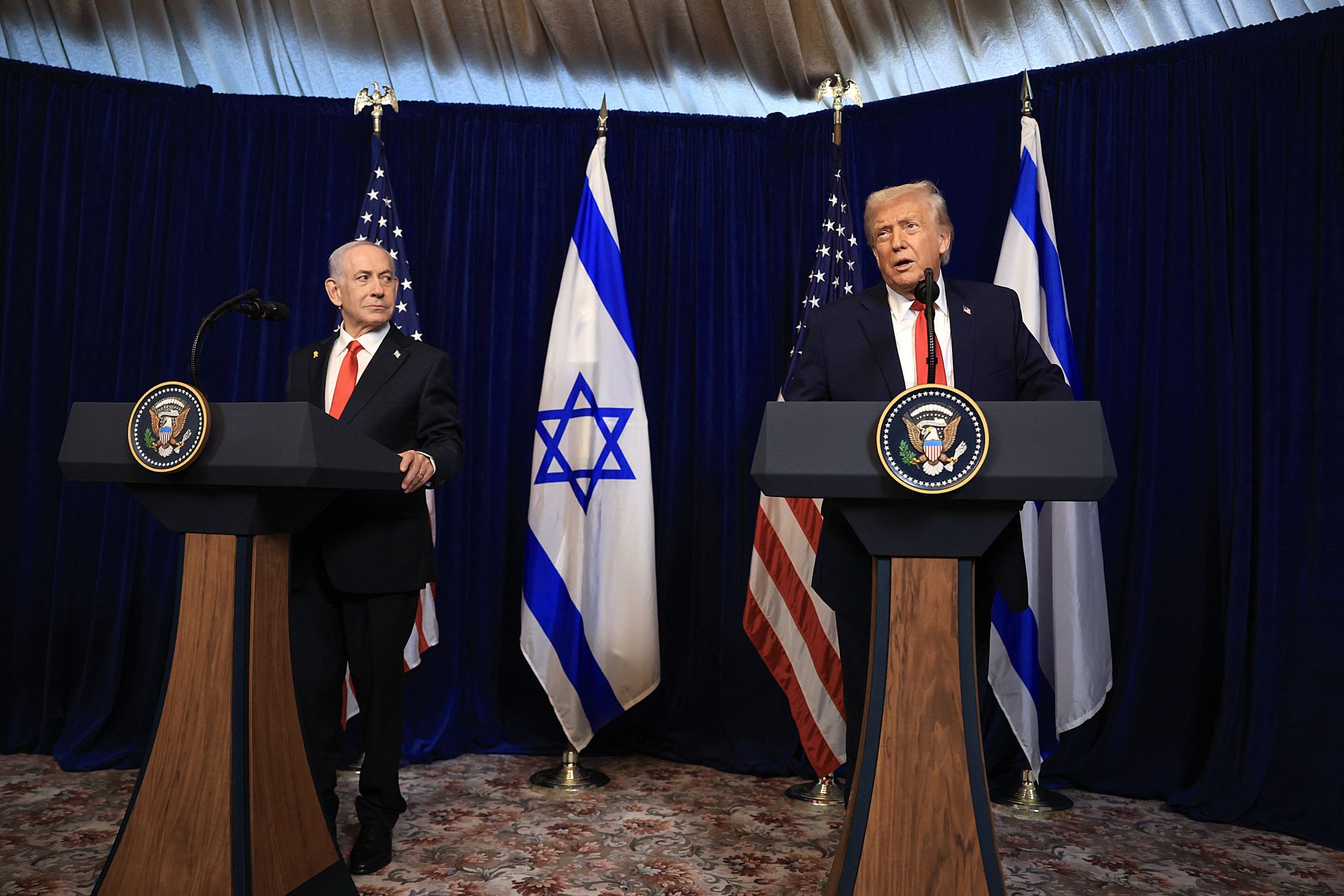
U.S. President Donald Trump signaled a tougher stance toward Hezbollah following talks with Israeli Prime Minister Benjamin Netanyahu on Monday in Florida, warning that the group is “behaving badly” and stressing that efforts to disarm it remain a central focus of U.S. policy toward Lebanon.
Speaking after the meeting at his Mar-a-Lago residence, the U.S. president said Washington was actively discussing the Hezbollah issue with the Lebanese government, adding that the group’s continued presence and military activity were obstructing regional stability. “We’ll see what comes of the efforts to disarm Hezbollah,” he said, describing Lebanon’s political situation as increasingly fragile.
The remarks came as Netanyahu pressed for a more confrontational approach toward Hezbollah, arguing that the group must be prevented from rebuilding its military capabilities both south and north of the Litani River. Israeli media reported that Netanyahu sought a U.S. green light to intensify military operations if necessary, framing Lebanon as a key front in Israel’s broader security strategy.
The meeting placed Lebanon at the heart of discussions, alongside Gaza, Iran, and regional security arrangements.
Hezbollah rejects pressure
Hezbollah Secretary-General Naim Qassem has already rejected U.S. and Israeli calls for disarmament, describing them as part of a broader effort to weaken Lebanon and reshape the region.
Speaking on Sunday, Qassem said disarmament could not be discussed while Israel continued to violate Lebanese sovereignty by land, sea, and air. He accused Washington and Tel Aviv of seeking to eliminate the resistance and turn Lebanon into a subordinate state. He reiterated that Israel must fully withdraw from Lebanese territory, warning that the resistance would not retreat or surrender.
Qassem also dismissed claims that the Lebanese army had failed in its duties, stressing that coordination between the army and the resistance had helped preserve stability along the border. He said any discussion of a national defense strategy could only occur after an Israeli withdrawal.
Regional stakes
The renewed focus on Lebanon comes amid heightened regional tensions following months of war in Gaza and growing instability along Israel’s northern frontier. While a fragile ceasefire remains in place, repeated cross-border incidents have raised fears of a broader confrontation involving Hezbollah and potentially Iran.
Trump said the U.S. would continue efforts to preserve the Gaza truce while working to prevent further regional escalation.
As diplomatic efforts intensify, uncertainty remains over whether the coming weeks will bring de-escalation or push the region closer to a wider confrontation centered on Lebanon.



Comments