The most notable aspect of the ninth draft of the plan is that the state itself is completely exempted from bearing any of the costs. This is especially significant given that it is the primary party responsible—from reckless spending, to squandering $45 billion on electricity, to illegal hiring, through the failure of the “Cedre” conference, to subsidizing imported goods that drained $14 billion from reserves, and ultimately defaulting on the Eurobond in 2020.
Amid ongoing government debates over the draft law addressing the financial shortfall and the fate of deposits, concern is growing within economic and banking circles over the plan’s potential direction. Each new draft leak highlights a deep disagreement—over how losses should be allocated and the extent of the burden the state must shoulder relative to the banking sector and depositors—while the economy remains trapped in one of its worst crises since the Republic’s founding.
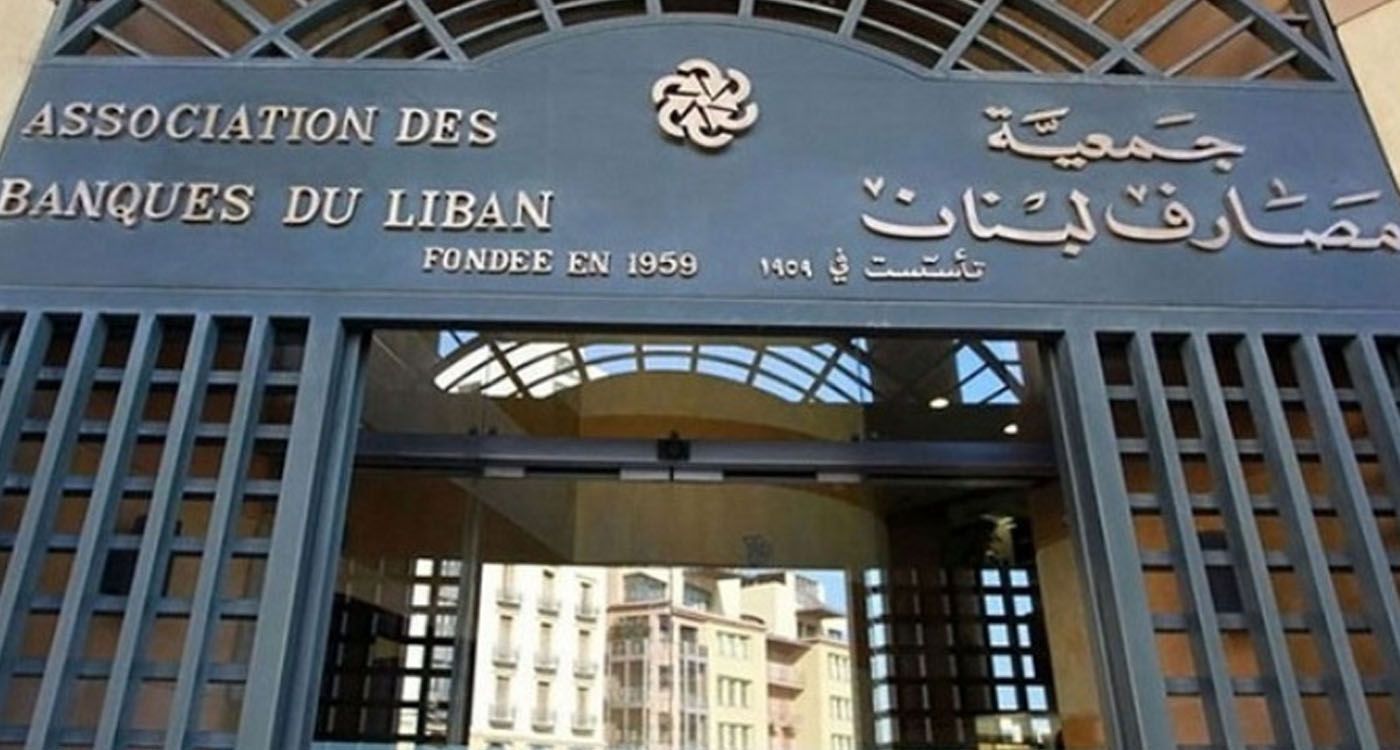
As banks grapple with a severely fragile financial reality that threatens their survival, banking sources disclose serious concerns that assigning them the bulk of the losses could trigger a systemic collapse of the sector. These concerns align with a deeper analysis by economist Nassib Ghobril, who argues that the circulating ninth draft of the law remains incomplete and that the state—the primary party responsible for the accumulation of losses—entirely fails to assume its role in any proposed solution. Amid bank warnings and expert assessments, the country faces a draft law that could redefine the financial sector for years to come, while decisive answers remain absent regarding the fate of deposits and trust in the financial system.
In this context, the economist notes that the country “has entered a prolonged period of waiting since the government began work on the draft law to determine the fate of deposits, also referred to as addressing the financial gap.” He explains that the ninth draft of the project, which was made public—whether intentionally or not—appears to have been released to gauge reactions from depositors, banks, and other relevant stakeholders. Meanwhile, according to leaked information, the government is currently working on a more advanced version, numbered 16.
According to Ghobril, the circulating draft “does not include all the details, but its core appears likely to remain the same: the first $100,000 for each depositor would be paid in cash over four years, while amounts above this threshold would be converted into long-term bonds backed by the Lebanese Central Bank (BDL) assets. These would be structured in tiers—$100,000 to $1 million, $1 million to $5 million, and above $5 million—with maturities varying by deposit size.”
Sources of the Liquidity
Ghobril explains that the cash component related to paying the first $100,000 would require liquidity sources estimated at a minimum of $20–22 billion, though these figures are not yet official. He adds: “This portion will be paid from BDL’s foreign currency reserves, totaling around $12 billion, of which $11.2 billion is a mandatory reserve originally belonging to depositors, in addition to the liquidity held by banks and their potential contributions.”
He emphasizes that “the banks’ role in this regard is inherent, as they are using their own funds and liquidity, but the fundamental question remains: what is the state’s contribution?” He notes that the bonds to be issued to depositors “will be backed by BDL’s assets, not by treasury funds.”
Ghobril points out that “the Currency and Credit Law, particularly Article 113, explicitly compels the treasury to cover BDL’s losses, yet the proposed draft entirely disregards this obligation.”
He also raises several questions regarding the types of assets that will back the bonds: “Are we talking about the gold reserve of 17.7 million ounces, currently valued at $38.4 billion? Does it include Middle East Airlines? Does it include real estate? Nothing is clear in the draft.” He stresses that the absence of these details “fundamentally undermines the credibility of the proposal.”
Ghobril illustrates with figures that the burden of cash payments will effectively fall entirely on the banks: “Banks currently hold around $6 billion in liquidity, of which more than $2 billion is unusable because it is reserved to cover fresh deposits. This means that the actual available liquidity does not exceed $4 billion, while the central bank holds $11.2 billion in mandatory reserves, which fundamentally belong to depositors. The total of these amounts falls short of the minimum required for cash payments.”
He further explains that “even selling all bank assets, including real estate and Eurobonds, would yield no more than an additional $8.5 billion,” leaving the cash gap “deep and impossible to bridge without state involvement.”
The economist further warns that “placing the entire responsibility for repayment on the banks alone could trigger serious repercussions: the lack of clarity in the draft may lead some bank boards to consider exiting the market and handing over control to BDL. Should any bank declare bankruptcy, depositors would need many years to recover even a small portion of their rights, which is precisely what banks have sought to avoid since the start of the crisis.”
In this context, Ghobril points out that “BDL’s governor had previously assured that the restructuring would be organized so that depositors would not lose their deposits, but this becomes difficult if banks are unable to provide the required liquidity for the $100,000 tier.” He further notes that “the purpose of the bonds to be issued by BDL is to cover the remaining deposits after excluding suspicious-source deposits, writing off accrued interest, and reconverting into Lebanese pounds the deposits that were converted into dollars by depositors after the onset of the crisis—equivalent to roughly $35 billion. Yet neither the state, BDL, nor the banks hold this amount in cash.” He emphasizes that these bonds “will not be inflationary, as they represent tradable financial assets rather than direct liquidity.”
According to Ghobril, the most striking aspect of the ninth draft of the plan is that the state itself is completely exempted from bearing any of the costs. This is particularly striking given that it is the primary party responsible—from reckless spending to squandering $45 billion on electricity, to illegal hiring, through the failure of the “Cedar” conference, to subsidizing imported goods that drained $14 billion from reserves, and ultimately defaulting on the Eurobond in 2020.
Ghobril further notes that “the government behaves as if it were an external observer of the crisis, rather than the political authority that created it through the misuse of power and mismanagement of the public sector.”
In sum, in the absence of government involvement, trust is eroded for years, and Ghobril emphasizes that any plan in which the government does not assume part of the cost “will not restore confidence—in the banking sector, the economy, or the government itself.” He concludes that “confidence in banks cannot be rebuilt before confidence in public institutions and the political authority. If the government does not take responsibility, there will be no possibility of restoring trust, today or in the years ahead.”


Comments