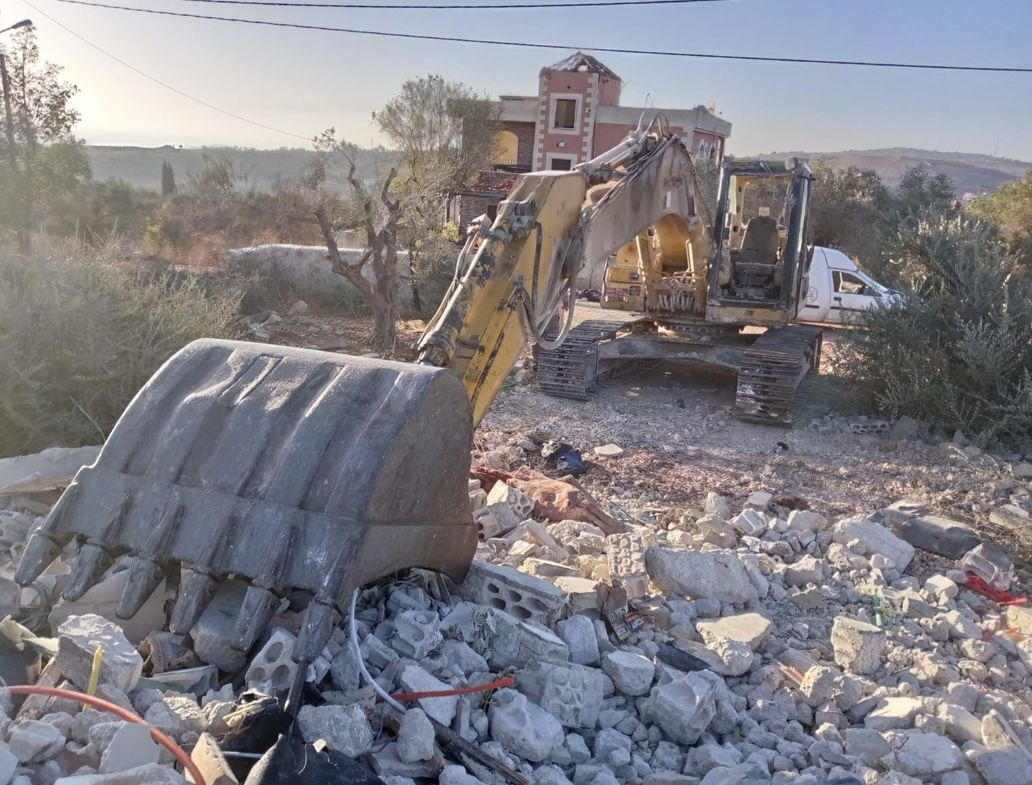
Lebanon’s parliamentary finance committee on Thursday approved the transfer of roughly $90 million USD in reserve funding for the Council of the South as part of the 2026 budget process to support reconstruction in areas damaged by Israeli bombardment in last year’s Israel-Hezbollah war.
According to parliamentary sources present at the Finance and Budget Committee meeting, MPs affiliated with Amal and Hezbollah stressed that the state must transfer a significant share of its reserve to reconstruction to signal to residents of the south that they have not been abandoned by the state.
In August 2025, the Ministry of Finance transferred $16.7 million USD to the Council allocated to reconstruction efforts in southern Lebanon, according to Finance Minister Yassine Jaber. Then, in September 2025, another $25 million was proposed to the Council in the draft budget, of which $4.7 million was earmarked for infrastructure works.
Taken together, the most recent allocation brings the total funding directed to the Council of the South to approximately $132 million.
MP and Minister Defend Funding
Supporters, including MP Ibrahim Kanaan, have previously argued that significant financial allocations are essential to restore public trust in the south and to support those affected by “Israeli aggression”.
In response to the most recent move, Jaber stated, “We sent a message from Parliament to the citizens, especially the residents of the South, West Bekaa, Beirut’s southern suburbs, Baalbek-Hermel, and Zahle, as well as all those affected by the Israeli aggression, the state must assume its responsibilities.”
Reconstruction Needs & Hezbollah’s War
The World Bank estimates that approximately $14 billion is needed to reconstruct southern Lebanon after the 2024 Israel-Hezbollah war.
Hezbollah has publicly framed reconstruction as part of both recovery and resistance to Israeli aggression, portraying these efforts as integral to fulfilling commitments made during the war.
Despite Hezbollah’s insistence that reconstruction is essential, the militant group has yet to make any meaningful contributions to this effort. Supporters that the group claims to protect are losing faith in Hezbollah’s ability to deliver on assisting with their basic needs.
Following the 2006 Israel-Lebanon war, Hezbollah spearheaded reconstruction initiatives in the south, largely financed by Arab Gulf states, notably Qatar. Meanwhile, Iran continued to fund Hezbollah without facing significant international scrutiny, allowing the group to maintain dominance over social networks and infrastructure.
This contrasts starkly with today’s situation. Naim Kassem is insisting that the Lebanese state bear financial responsibility for reconstruction, indicating the group’s crippling financial obstacles. Iran’s financial support for Hezbollah is facing tightened international monitoring via sanctions and funding channels through Syria are more limited after the fall of President Bashar al-Assad.
Transparency and Oversight Concerns
The Council of the South remains a central patronage arm of the Amal movement, controlling construction funds and strategic local influence. Amal’s close ties to Hezbollah heighten concerns over the large, discretionary public funding allocation that may lack proper oversight and transparency.
Critics have long pointed to Lebanon’s political patronage system, a core grievance behind the 2019 movement that slammed the government for corruption and patronage networks. Channeling large allocations outside standard ministerial frameworks weakens centralized oversight and reinforces parallel governance structures, an issue that has already contributed to Lebanon’s prolonged economic crisis.
The move consolidates political influence among the “Shiite duo” rather than empowering transparent and centralized budgeting.


Comments