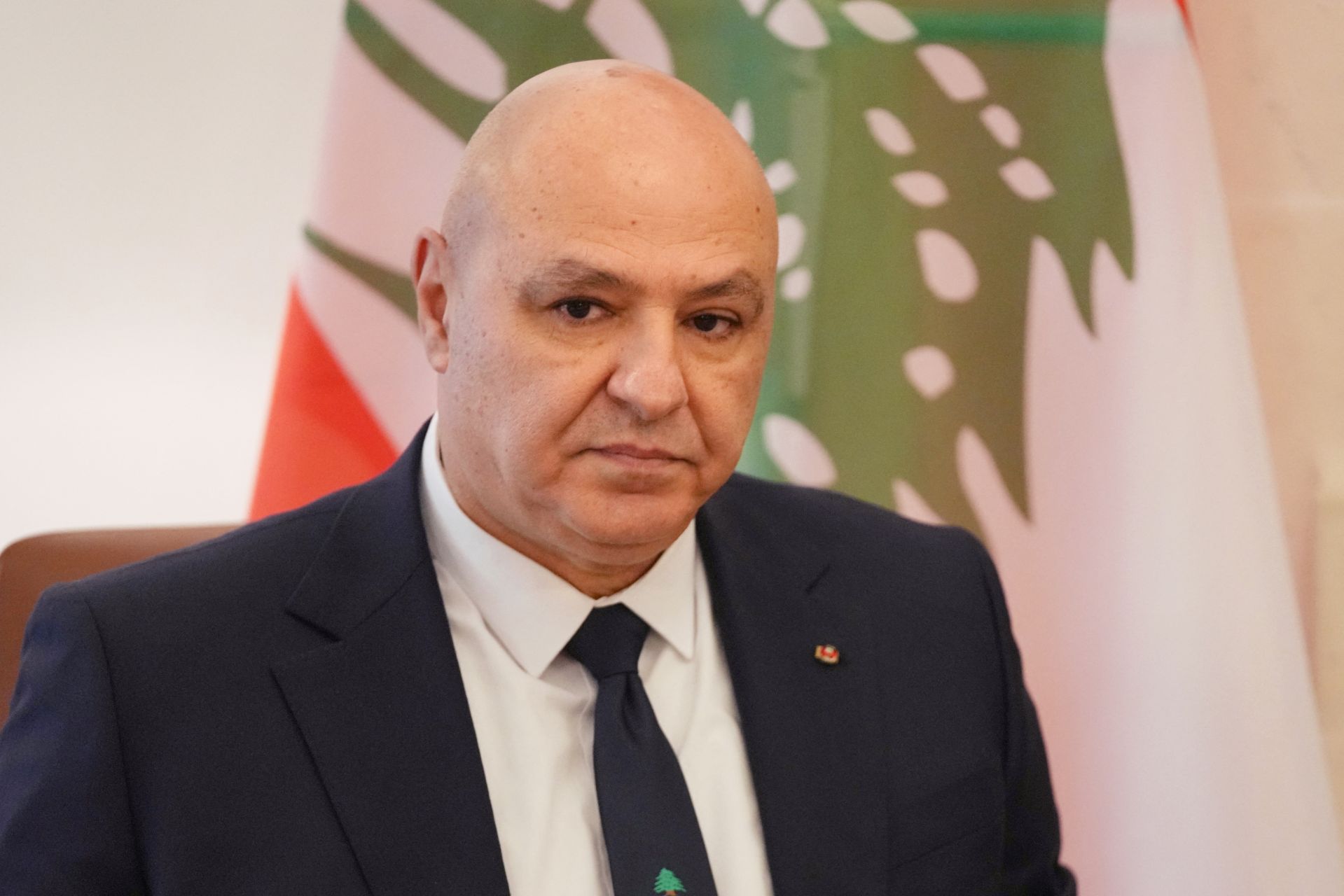
President Joseph Aoun stressed on Tuesday that the Lebanese government last year took a historic step by endorsing a plan aimed at confining weapons to state authority and extending state control over Lebanese territory exclusively through its own forces, calling the move a major turning point despite the challenges of implementation.
Addressing members of the diplomatic corps and representatives of international organizations accredited in Lebanon, Aoun said the plan was approved between August 5 and September 5 of last year, describing it as an unprecedented shift in Lebanon’s modern history. “Let me say frankly that in this field we have achieved what Lebanon has not known for 40 years,” he said.
Aoun emphasized that security on the ground reflects this shift, noting that no shots were fired from Lebanese territory during the year of his presidency, with the exception of two isolated incidents last March, whose perpetrators were swiftly arrested by state authorities. “The truth is what you see, not what you hear,” he said, adding that for more than ten months the Lebanese Army and the armed forces alone have effectively controlled the area south of the Litani River.
Reflecting on his first year in office, Aoun said he assumed responsibility for a “deeply wounded state” after two decades of institutional paralysis following Lebanon’s second independence in 2005. He underscored that the Lebanese Armed Forces (LAF) have undertaken “enormous tasks” to clear large areas of illegal weapons of all kinds and affiliations, in line with the November 27, 2024 agreement, which he described as an international commitment that Lebanon fully respects.
The president said the measures were driven not only by adherence to international agreements, but by Lebanon’s own national interest, in order to avoid “suicidal adventures” that have exacted a heavy toll in the past. He pledged to continue on this path in the second year of his presidency, aiming to restore full state authority over all Lebanese territory, secure the return of detainees, and rebuild what was destroyed by attacks and reckless ventures.
Aoun stressed that southern Lebanon, like all of the country’s international borders, must be placed exclusively under the control of the armed forces, “putting an end once and for all to any attempt to draw us into the conflicts of others on our land.”
He welcomed the setting of a date for an international conference to support the Lebanese Army and the Internal Security Forces, crediting the efforts of the United States, Saudi Arabia, France, Qatar and Egypt within the Quintet Committee, alongside other friendly nations. The conference is scheduled to be held in Paris on March 5 under the patronage of French President Emmanuel Macron.
On the domestic front, Aoun highlighted what he described as major progress on reforms, including the adoption of the long-awaited Judicial Independence Law and the establishment of regulatory authorities for key sectors long left vacant, enabling corruption and political clientelism. He also pointed to the reconstitution of legitimate authorities through the holding of municipal and local elections for the first time in nine years, and vowed to proceed with parliamentary elections later this year.
Concluding his remarks, Aoun expressed optimism for the year ahead, telling diplomats that when they meet again around the same time next year, Lebanon’s achievements will be greater, its circumstances improved, and its people enjoying increased prosperity and stability.
Comments