- 11:05
AnalysisLebanon’s Lost Coast: How Public Rights Became Privileges for the Few
Read : 6 minute(s) A A A
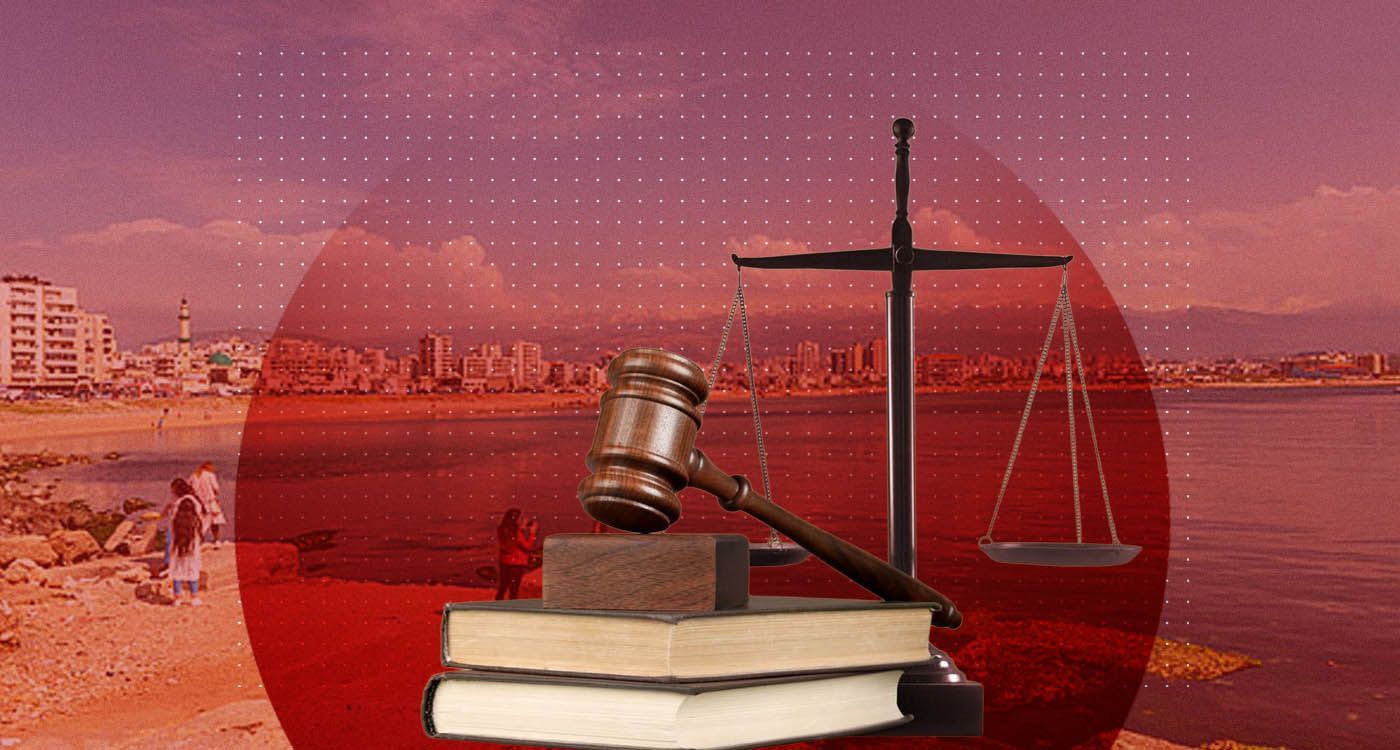
Lebanon’s coastline, which belongs to the state and is considered maritime public domain, is once again in the spotlight. On Tuesday, the cabinet reopened debate on this long-neglected national asset, directing relevant state bodies to coordinate efforts to increase revenues from these seaside properties.
The discussion reflected a widely shared view that, despite its significant economic promise, Lebanon’s coastline remains heavily affected by illegal encroachments, informal use, and fragmented governance. This ongoing mismanagement continues to deprive the beleaguered public treasury of a vital source of revenue.
While Lebanon’s coastline offers enormous potential through port concessions, tourist facilities, beach activities, and coastal resources, it also exposes one of the state’s most enduring failures in governance. For decades, the country’s maritime public domain has been gradually eroded and effectively privatized, sometimes under legal decrees and often without oversight.
This is Beirut examines Lebanon’s maritime public domain, the legal framework governing it, how it has gradually been diverted from its original purpose, and how much these private sector encroachments—legal or otherwise—have cost the Lebanese state and citizens deprived of access to the sea.
Legal Framework
Lebanon has a long-standing and well-defined legal framework governing its maritime public domain. Decree 144/S of June 10, 1925—adopted under the French mandate and still in force—establishes that the seashore, beaches, and stretches of sand and pebbles up to the highest winter waves, as well as land reclaimed from the sea, belong to the state’s public domain. This domain cannot be sold or otherwise transferred, nor can it be converted into private property, regardless of how long it has been held.
This founding principle has been reinforced over the decades through a series of regulatory and legislative texts. Decree 4810 of June 24, 1966, set out the rules governing the temporary use of the maritime public domain while reaffirming its status as public property. It also introduced a concept that would later become central and highly controversial: the state’s authority to grant, by decree, temporary use of the maritime public domain for tourism, industrial, or other economic purposes, provided such use serves the public interest. Originally conceived as a narrowly regulated exception, this provision has gradually become the rule.
Before the civil war, permissions for the temporary use of the coastline remained limited, and at least in theory, under strict control. After 1975, and especially following the end of the conflict in 1990, Lebanon’s coastline slipped into a legal gray zone. The collapse of state authority, chaotic reconstruction, political deals, and widespread corruption created conditions that enabled extensive violations. Dozens of projects were launched without clear permits, while others were later regularized through tailor-made decrees.
Under the law, use of the maritime public domain cannot grant ownership. Any authorization to use it is temporary, must be renewed every year, and can be withdrawn by the state at any time, without compensation. In exchange, property users are required to pay an annual fee based on how much land they occupy, where it is located, and what it is used for. In theory, this system was designed to let the state benefit from a public resource without giving up control over it.
In practice, the system has been stripped of effectiveness and become an administrative formality. Fees are based on outdated decrees and are often set at token amounts in Lebanese lira, with little adjustment to reflect the true market value of the coastline. Even after partial updates in recent years, the amounts collected remain far below the profits generated by the operators.
De Facto Privatization
Today, the scandal lies not only in underpaid legal uses but, more importantly, in the scale of illegal occupations. According to cross-checked data from the Ministry of Public Works, civil society organizations, and recent investigative reporting, more than five and a half million square meters of the maritime public domain are now occupied along Lebanon’s coastline. Nearly half of these occupations lack valid authorization. They include beach resorts, restaurants, private ports, residential complexes, and reclaimed land built without permits.
In practical terms, barely 20 percent of Lebanon’s coastline remains freely accessible to the public. Only about forty kilometers of it still offers direct, free, and uninterrupted access to the sea. The rest is fragmented, fenced off, or available only for a fee. This de facto privatization is not limited to upscale tourist areas: it extends across the country, from the North to the South, turning what should be a collective right into a privilege reserved for a few.
The cost to the state is enormous. Estimates vary, but multiple sources point to annual losses of tens of millions of dollars in uncollected fees. Over the long term, the cumulative shortfall could reach hundreds of millions.
Restoring the Coastline: A Challenge for the State
For years, bills aimed at regularizing, taxing, or dismantling illegal occupations had stalled. Some called for legalizing certain uses in exchange for payment, while others advocated the outright restitution of the public domain. None ever advanced, caught between political pressure, economic interests, and a lack of executive will.
In recent months, however, signs of change have emerged. In December 2025, the Council of State annulled a decree authorizing the occupation of nearly 70,000 square meters of the maritime public domain in Zouk Mosbeh. This unprecedented ruling marks a turning point: for the first time, the country’s highest administrative court explicitly recognized that public interest and the protection of the maritime domain take precedence over political and economic interests. It paves the way for a broader reassessment of decrees adopted in recent years.
At the same time, the government’s move to review several controversial authorizations has generated both hope and skepticism. NGOs and citizen groups that have long documented violations along the coastline see it as a historic opportunity. Others fear it may be little more than a cosmetic exercise, with no real effort to dismantle the most blatant encroachments.
In Lebanon, the sea is not just a blue line on the horizon, but legally a right, common good, and national asset enshrined in the founding texts of the state. And yet, along the country’s 220-kilometer coastline, this right is increasingly restricted behind fences, beach resorts, private ports, reclaimed land, and illegal constructions that, over time, have become a fait accompli.


Comments