- Home
- Middle East
- Trump, Maduro, and Iran
- 05
- Jan.
- 2026

(Marcelo GARCIA, AFP)
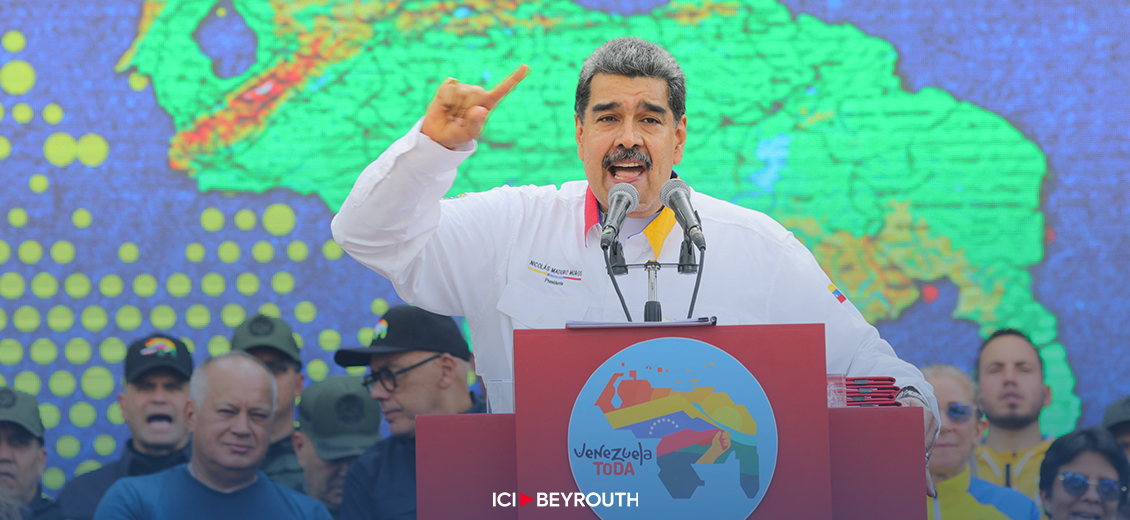
America's dramatic capture of Venezuelan dictator Nicolas Maduro has set the stage for the conduct of America's national security strategy in 2026. It has also raised questions.
Was it legal?
Judging from precedents set with the 1990 capture, trial, conviction, and imprisonment of Panamanian strongman Manuel Noriega, the answer is probably yes, when it comes to U.S. domestic law. In Noriega’s case, an American court accepted jurisdiction. It dismissed the defense claim of head-of-state sovereign immunity, drawing a distinction between immunity for official acts and private criminal activity. The case against Maduro is very similar. It is unlikely the Administration removed Maduro to the Southern District of New York without a high degree of certainty there will be no jurisdictional problems. The Trump Administration is at pains to emphasize it conducted a "law-enforcement" operation, for which the Executive Branch has broad authorities to act overseas.
International law is less straightforward. An argument could be made under international law for "just" action against Maduro given his destabilization of the entire hemisphere through refugee flows, corruption, gross human rights violations, and falsification of the 2025 election. The Trump team, however, is not resting its legal argument on those factors, preferring the cleaner case of law enforcement against a criminal drug kingpin. Much time will be spent in debates at the UN and various other places, but all of that will be moot since international law has no enforcement mechanism.
Was it necessary and smart?
Success has a thousand fathers, defeat is an orphan. If things turn out well -- a successful conviction and some improvement in Venezuelan behavior -- the Trump team will feel vindicated. Nonetheless, it is producing another hairline crack in Trump's MAGA base. Many applaud aggressive drug interdiction operations in the Caribbean and admire the skill and courage of the soldiers who planned and conducted this triumphant raid. But the whole thing runs against a core desire to have a very high bar for American military intervention abroad. The author of the Monroe Doctrine -- then-Secretary of State John Quincy Adams -- famously said "America does not go abroad in search of monsters to destroy." It is ironic that this elitist American statesman -- and opponent of Andrew Jackson -- encapsulated so well a key belief that animates MAGA's worldview. In contrast, Trump has said the U.S. will "run" Venezuela until a transition occurs there and emphasized the opportunity he has created for American energy interests. Yet, there is a strong current in his movement that doesn't want to "run" another foreign country -- sounds like a costly quagmire -- and suspects that foreign policy entanglements have more to do with the interests of plutocrats than of our nation. That viewpoint may not be fair or accurate, but it is a pronounced strain in our politics that contributed to Trump's election victories.
Trump knows his politics better than I do, but we can already see the contortions of his top advisors as they try to explain their goals and next steps with this disconnect in mind. Secretaries Rubio and Hegseth are right to point out that Venezuela is not Iraq, Afghanistan, or Libya; despite years of Chavismo, the country enjoys a strong identity as a nation-state and has muscle memory of democratic governance. Hegseth is also correct to emphasize that this operation is "the exact opposite" of our campaign in Iraq; there is no ongoing occupation, nor any nation-building agenda here. Rubio has walked back Trump's "running" Venezuela statement by saying Washington will use the leverage of the oil export quarantine to change the regime's behavior and bring about a transition.
What Is Next?
When it comes to Venezuela, it is unclear. In the first 48 hours -- an unfair timeframe to judge -- Maduro's top deputies are in charge. They are committed Chavistas, part of their departed leader's alignment with Russia, Cuba, and Iran, and his corruption and gross mismanagement. Browbeating them into change will be an interesting exercise. Hopefully, the 60+ nations that condemned Maduro's electoral fraud last year, and his crimes against humanity, will move past handwringing and lend a hand to a peaceful transition. Or, as usual, do they prefer talk to action?
What Are the Larger Foreign Policy Implications?
The Trump team just demonstrated they meant what they wrote in the November 2025 National Security Strategy: priority number one is the Western Hemisphere and reasserting American dominance there. For the allies of Russia and China in Latin America and globally, it is another example of those two "great powers" becoming idle bystanders the moment the U.S. projects power against their woebegone allies.
The situation in Iran comes to mind, as Trump has threatened unspecified action should the Tehran regime yet again turn violent against its own long-suffering people. That is a refreshing change from the Obama Administration's stance during the Arab Spring and Iran's Green Revolution, when we ditched our unsteady Arab allies yet ignored the transgressions of our Iranian foes. The Maduro example is one more tool in what must be a comprehensive, persistent pressure campaign to make permanent the recent reversal of fortunes for Iran's clerical police state. Iran's ayatollahs have spent almost half a century driving their country into the ditch and causing untold misery throughout the region. Time to rid Iran of them.
Read more
Comments