- 29
- Dec.
- 2025


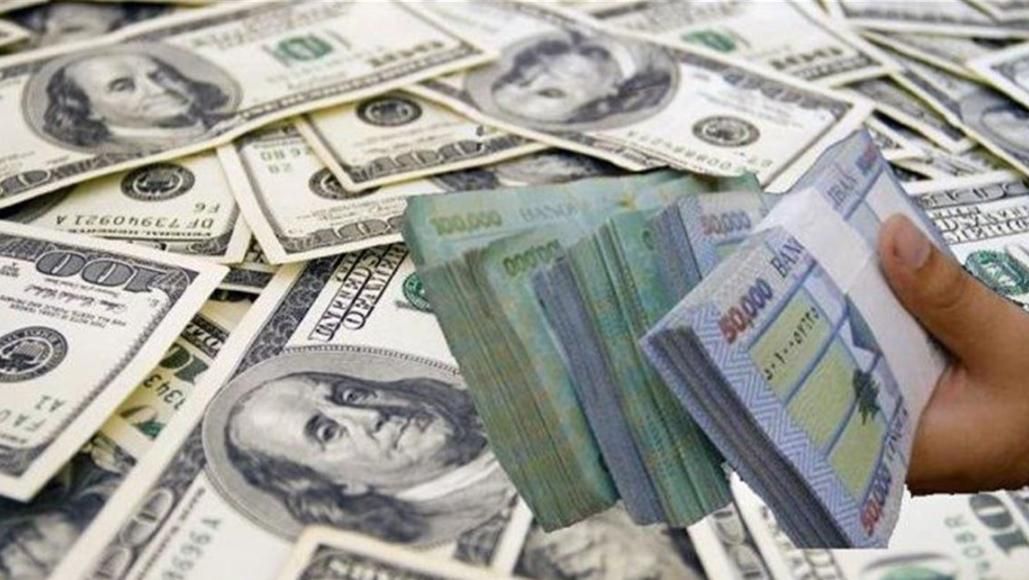
Lebanon’s cabinet on December 19 approved one of the most controversial pieces of legislation since the country’s financial collapse in 2019, adopting the so-called “Gap Law” in a narrow vote that has reignited public anger and raised serious concerns among economists, legal experts, and international observers.
Backed by 13 ministers against nine, the law aims to close an estimated $70 billion gap between bank liabilities to depositors and the amount the financial system—including the state and Banque du Liban (BdL)—can repay in the aftermath of the 2019 meltdown.
Yet rather than offering clarity or reassurance, the law, critics argue, institutionalizes losses, shifts responsibility away from the state, and risks locking Lebanon into a prolonged cycle of legal uncertainty, economic stagnation, and social erosion.
Prime Minister Nawaf Salam defended the law as a “realistic” step forward, saying it would restore confidence in the banking sector and allow depositors, particularly smaller ones, to recover their funds.
Outside the Grand Serail, however, protesters gathered as the cabinet met to approve the law, denouncing what they described as another betrayal of citizens whose savings remain trapped six years after the financial collapse.
What’s Next?
Despite cabinet approval, the bill is unlikely to pass parliament in its current form. It is expected to face prolonged scrutiny and potential amendments, reflecting deep political and institutional divisions.
In the absence of a comprehensive and publicly articulated economic vision, doubts persist over Lebanon’s ability to chart a credible recovery path without a strong and trustworthy banking sector. This skepticism comes even as officials revive promises of 5% economic growth by 2026, which prevailing assumptions indicate would hinge largely on private-sector momentum rather than meaningful financial restructuring.
In this sense, the “Gap Law” mirrors Lebanon’s broader relationship with the International Monetary Fund (IMF): protracted negotiations, disputed figures, unresolved responsibilities and a crisis that has evolved beyond liquidity or debt into a systemic breakdown affecting governance, accountability, and the foundations of the state.
How the Gap Law Works
The draft law formally recognizes the estimated $70 billion in losses in the financial sector and proposes mechanisms aimed at redistributing them between the banks, BdL, the state, and depositors.
The legislation states that deposits up to $100,000 would be repaid in cash over four years, without any clearly identified source of funding. Deposits exceeding that threshold would not be fully repaid; instead, they would be converted into long-term financial instruments issued by BdL, carrying relatively low interest rates and maturities stretching up to 20 years.
Critics warn that the burden placed on depositors is substantial. Veteran investment banker Carlos Abadi told This is Beirut that depositors above the $100,000 threshold face “very low and uncertain recoveries,” while those below it may recover funds only if banks can generate sufficient liquidity, something the law does not guarantee.
Similarly, Ghassan Hasbani—a Lebanese Forces MP and former deputy prime minister—warned that the asset-backed bonds proposed by the law are not fully guaranteed. He noted that they would carry returns of only 2% annually over 15 to 20 years after an initial five-year grace period, meaning depositors could wait decades to recover their funds, if they recover them at all.
Hasbani also pointed to major technical flaws, particularly the application of the “one depositor” principle. Under the law, the first $100,000 is calculated per individual or household rather than per account, meaning depositors with multiple accounts may benefit only once, while the fate of remaining balances remains unclear.
This, he said, creates a legal grey zone; many of these accounts belong to small and medium-sized businesses, professional syndicates, insurance funds and pension schemes, not wealthy speculators.
Who Bears the Burden?
The legislation does not answer the fundamental question of who will ultimately bear the brunt of the losses. Abadi, the managing director of the financial advisory firm DecisionBodies, argues that the burden falls squarely on depositors and banks.
“This is a very transparent shifting of responsibility that the state and the central bank should have assumed,” he said, adding that account holders are effectively being forced to finance the state for its failures over the past 20 years.
Hasbani echoed this concern, noting that depositors are at very high risk, particularly those with balances above $100,000 who are often wrongly assumed to be of greater wealth than those below this threshold.
However, he explained that many of these accounts belong to professionals, small businesses, and institutions essential to economic stability. Their losses represent roughly 20% of the financial gap. “These accounts are a part of the backbone of the economy,” Hasbani said.
Some of these accounts also consist of deposits for insurance, retirement, and national security funds. “Those are not funds for fat cats and rich investors who have put their money in Lebanon,” he said.
Instead of improving financial stability as Prime Minister Nawaf Salam claims, the law will not only harm depositors and banks, but it will also confiscate wealth from the private sector, according to Abadi. “This may lead to an additional 15 to 20% contraction in output,” he said.
Lack of Accountability
The “Gap Law” does not hold the state accountable for losses incurred, Abadi explains. It sidesteps what is essential for true economic reform: formally acknowledging those losses and assigning responsibility for the financial collapse.
Hasbani echoed this concern, stressing that the law neither holds the state accountable for its losses nor clearly defines obligations toward BdL. “It keeps responsibility vague and open-ended,” he said.
The MP noted that the draft law does not hold to account those who contributed to the crisis, including public officials, bankers, and BdL officials.
Further, Hasbani pointed to provisions allowing individuals who transferred funds abroad after the financial collapse in 2019 to be fined only 30% of these funds, even if the money was obtained or moved illegally.
He warned that this effectively shields those who abused their power to transfer funds out of Lebanon from accountability, calling it a form of “legalized money laundering.”
Impact on International Investment
While Prime Minister Salam said the “Gap Law” would open the door to renewed understanding with the IMF and donor countries and help attract investment, Abadi argues that this is far from the truth.
Abadi said the “Gap Law” violates Lebanese and foreign legislation to which the Lebanese state, BdL, and commercial banks are subject, which in turn will undermine international confidence among creditors and investors seeking Lebanon’s progress on the rule of law.
For example, the legislation ignores the state’s obligation under Lebanon’s Code of Money and Credit to recapitalize BdL for its losses, weakening its legal framework, the investment banker said. Not only will the “Gap Law” be policy malpractice, Abadi argued, but it will be viewed in the international and multilateral financial community as an “aberration.”
Hasbani reiterated this concern, stressing that IMF approval remains essential for unlocking international funding. Without it, Lebanon risks deepening its isolation and financial paralysis. “Lebanon needs a resolution that supports the rights of individuals fairly while it satisfies the IMF requirements.”
Necessary Amendments
Abadi argued that any credible revision of the law must include the careful use of BdL’s gold reserves as collateral for the recovery of commercial bank deposits, which would improve confidence in the legislation’s capacity to compensate account holders.
Hasbani, for his part, stressed that bank recapitalization must be carried out by the government, with a clear, credible plan for implementation. The state must formally acknowledge its debt to the BdL in order to strengthen its capacity to repay deposits without imposing a wipeout on depositors, he said.
The MP emphasized that Lebanon must address the root causes of its economic crisis through wide-ranging public sector reforms and improved management of state-owned assets, enabling the state to meet its debt obligations and support BdL’s recovery and recapitalization.
“If the same energy invested in the ‘Gap Law’ were applied to reforming the public sector,” Hasbani said, “Lebanon would already be on a credible path toward recovery.”



Comments