- Home
- Middle East
- How Syria Can Begin Integrating the SDF
- 10:00

©This is Beirut
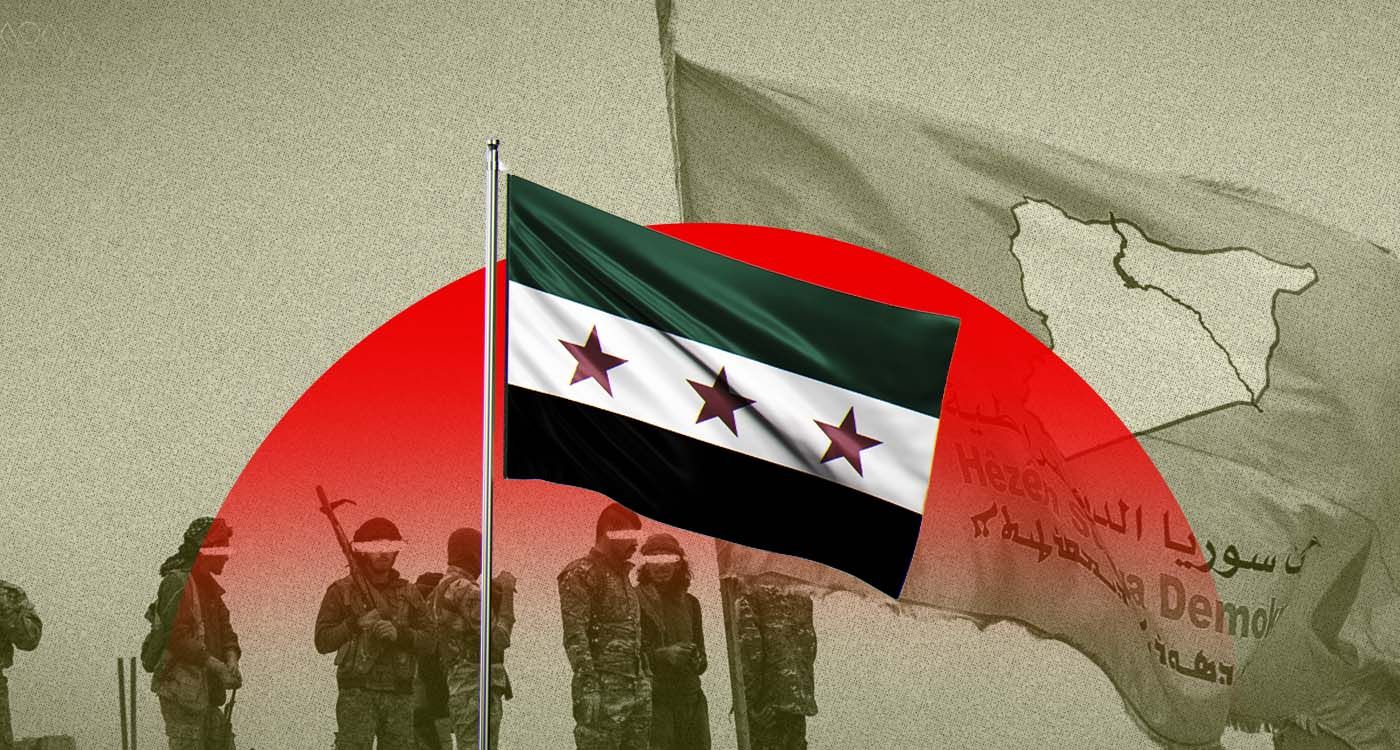
Aleppo clashes between Syrian government troops and Kurdish-led forces highlight the difficulty of security integration in one area, let alone a whole third of the country.
Clashes erupted December 22 in Aleppo between Syrian government troops and the local Kurdish security forces (Asayish), killing at least three people and underscoring the challenges facing efforts to unify armed factions under the Syrian transitional government. Even as Damascus seeks to consolidate nationwide security and integrate armed actors, Aleppo remains a patchwork of factions, marked by intermittent fighting between government troops and Kurdish forces.
After more than thirteen years of civil war, it is understandable that Syria faces difficulties unifying factions with widely different ideologies and backgrounds. The Kurdish-led Syrian Democratic Forces (SDF) in eastern Syria, for instance, are rooted in left-leaning politics. Hayat Tahrir al-Sham (HTS), which led the December 2024 offensive that toppled the Bashar al-Assad regime, is a conservative Islamist group. Critics of both HTS and SDF accuse the groups of being “terrorists,” while policymakers must chart a path to bring them together in the interest of Syria’s stability.
Authorities in Damascus have been standing up new units as they rush to fill the vacuum left behind with the melting away of Assad’s security state in December 2024. These forces include the Ministry of Interior’s Internal Security Forces, the General Intelligence Service, and various new units of the Ministry of Defense. Yet, there does not appear to be a clear plan to integrate the tens of thousands of SDF troops in eastern Syria with the newly-emerging government forces.
Damascus is working closely with Turkey to rebuild its forces. Ankara, for its part, has long opposed the U.S.-backed SDF in eastern Syria and is pushing for their de-facto dissolution through integration into Syria’s new security framework. On December 22, hours before clashes erupted in Aleppo, Turkish Foreign Minister Hakan Fidan, Defense Minister Yaşar Güler, and intelligence chief İbrahim Kalın traveled to Damascus to meet with Syrian President Ahmad al-Sharaa. Fidan accused the SDF of stalling on integration to the government, a view shared by Damascus.
In March, SDF commander Mazloum Abdi met with Sharaa in Damascus and agreed on an integration protocol; however, little has happened since. Reports suggest the Kurdish-led forces could be integrated into Syria’s Ministry of Defense by rebranding SDF three divisions as independent brigades—rather than breaking them up—effectively incorporating up to 80,000 troops.
However, the Syrian government appears reluctant to absorb such a large number of troops, as they could crowd out the newly trained pro-Damascus forces. While the plan would provide Syria with experienced units trained and equipped, to some extent, by the U.S., it would chafe with Damascus and Ankara’s aims for deeper integration.
The clashes in Aleppo show how hard integration is in one area, let alone a whole third of Syria. One possible path forward for broader integration could be to start on the small-unit level in an area where SDF and Syrian security forces are already located next to each other and have operational experience working with the U.S.
The perfect starting point is the Middle Euphrates River Valley, a stretch of territory primarily inhabited by large Sunni Arab tribes extending from Deir Ezzor to Albukamal along the Iraqi border, where ISIS was defeated in 2019. This area is strategically important, serving as the entry point for insurgents into Iraq after 2003, a staging ground for the rise of ISIS in 2013-2014 as well as a corridor for Iranian arms to Hezbollah via Syria after 2019. The U.S. Central Command recognizes the importance and has been training the SDF and forces deployed by Damascus in the area. For instance, two American soldiers and an interpreter were killed near Palmyra in Syria on December 13 while working with the new Syrian security forces.
The U.S. could play a pivotal role in bringing together the Kurdish-led troops and forces dispatched by Damascus, acting as liaisons between SDF battalions in the Middle Euphrates River Valley and partner Syrian forces on the other side of the Euphrates. This would also help raise the professional capacities of new Syrian security forces to the levels of the SDF. The U.S. Army has Security Force Assistance Brigades that could be used to help with liaising, advising, and assisting. This does not call for more U.S. boots on the ground, but for coordinating assets already in Syria.
Integrating or partnering units at the battalion level is easier than trying to get the Syrian Ministry of Defense to absorb whole divisions. Damascus would see this as fulfilling the concept of unity. Turkey, for its part, might look on this kindly because the units would be far away from Turkey, near the Iraqi border. Meanwhile, the SDF could get a chance to build confidence with their new Damascus partners. Also, the SDF could deploy battalions with Arab fighters, rather than the core Kurdish ones stationed elsewhere, which could reduce friction and suspicion with nearby Damascus-deployed soldiers. Any potential tensions could be eased if units included fighters from the local tribes.
Although HTS fighters who fought in Idlib in northwestern Syria under Sharaa’s command have little in common with Kurdish-led SDF troops in the east of the country, the two groups must cooperate if the country is to secure stability.
Read more

Comments