- Home
- Middle East
- Who Really Defeated ISIS in Syria?
- 09
- Dec.
- 2025

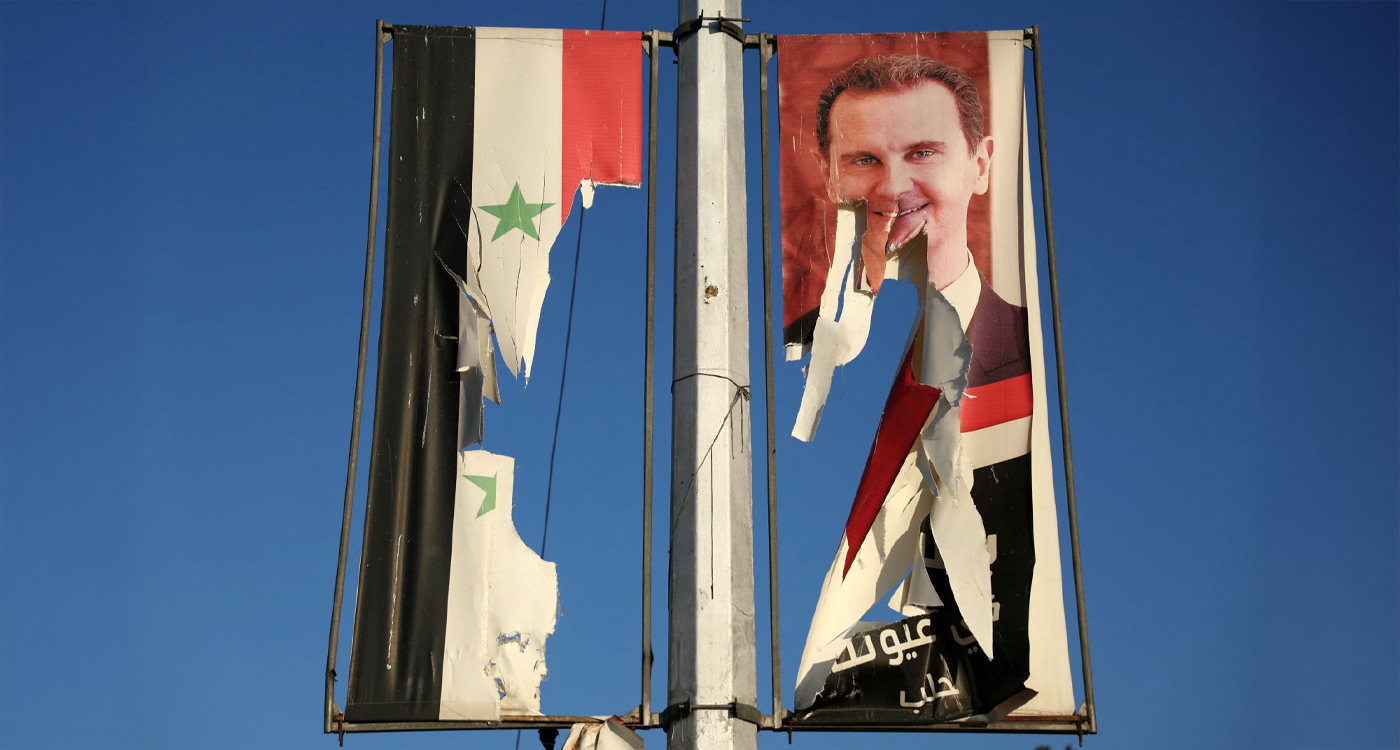
©Omar Haj Kadour / AFP
In the narrative promoted by Moscow and Damascus, Russia and Bashar al-Assad’s regime are credited with delivering the decisive blow against ISIS in Syria. This account frames Russia’s military intervention, which began in September 2015, as the turning point in the fight against the terrorist group.
Yet, a closer look at the data paints a very different picture. Not only did Russia fail to play a leading role in ISIS’s territorial defeat, but Assad’s regime also actively facilitated and financed the terrorist organization for years.
From Historical Support to Strategy
Long before ISIS declared its caliphate in 2014, Assad’s regime had established a long-standing tradition of supporting the terrorist networks that would eventually form the organization. Between 2001 and 2011, Syria served as a hub for foreign fighters traveling to Al-Qaeda in Iraq (AQI), which later evolved into ISIS.
In February 2008, the U.S. Treasury Department sanctioned Abu Ghadiyah’s network, stating that “Syria has become a transit point for foreign Al-Qaeda terrorists heading to Iraq.”
The Sinjar documents, seized by the U.S. military in 2007, detail Al-Qaeda in Iraq’s logistical network and reveal the extent of Syria’s role as a transit corridor for foreign jihadists. They show that the group relied on at least 95 different Syrian coordinators to facilitate the fighters’ passage.
When the Arab Spring reached Syria in March 2011, Assad turned this relationship into a deliberate strategy. A report from the Washington Institute notes that as early as May 2011, the Syrian government began releasing jihadist terrorists under Presidential Decree No. 61, covering “all members of the Muslim Brotherhood and other detainees belonging to political movements.”
Bassam Barabandi, a former Syrian diplomat, told the Washington Post on December 8, 2024, that “the fear of a continued peaceful revolution is the reason these Islamists were released. According to the regime, they served as a substitute for a peaceful revolution.”
Among those released was Ali Moussa al-Shawakh, who later became the head of ISIS’s intelligence service.
Assad’s Non-Engagement and Deals with ISIS
Once ISIS was established in Syria, Assad focused on targeting moderate rebels rather than the group itself.
Meanwhile, he benefited from dealings with the terrorist organization. In 2017, the U.S. State Department said the Syrian regime “purchased oil from ISIS through various intermediaries.”
According to the U.S. Treasury, in 2014 ISIS may have earned up to $100 million from oil sales to regional actors, including Assad’s regime. In March 2015, the EU sanctioned George Haswani for “supporting the regime as an intermediary in ISIS oil purchases.”
Moreover, the regime allowed more than twenty Syrian banks to continue operating in ISIS-controlled territories, remaining “linked to their headquarters in Damascus,” according to a February 2015 report by the Financial Action Task Force. Even after the U.S. Treasury sanctioned ISIS financial facilitators operating from Syria in 2019, the Syrian government took no action against them.
Russia’s Intervention: Targeting the Opposition, Not ISIS
On September 30, 2015, Russia launched its campaign in Syria, ostensibly against ISIS. But the Washington Institute documents that the first strikes hit Talbisah, Homs, and Idlib, areas where ISIS did not operate. The real targets were the Free Syrian Army and moderate rebels supported by the CIA.
In October 2015, the U.S. State Department stated: “More than ninety percent of the strikes did not target ISIS. They largely hit opposition groups seeking a better future for Syria.”
A report by the Center for Strategic and International Studies (CSIS), published in May 2020, found that “Russian leaders conducted virtually no strikes against ISIS until September 2015” and that “the strategy consistently prioritized stabilizing the Assad regime and defeating the opposition over operations against ISIS.” Between September 2015 and January 2018, “Russian air forces carried out more than thirty-four thousand combat sorties,” but they mainly targeted the opposition.
The toll is staggering. According to the Syrian Observatory for Human Rights (SOHR), “Russia was responsible for 8,289 civilian deaths in the first four years of its campaign, including nearly two thousand under the age of 18.” The CSIS report documents “595 attacks on 350 medical facilities, killing 923 medical personnel.”
In Aleppo, “73 attacks on hospitals were recorded between June and December 2016, averaging one strike every three days.”
The True Winners: Coalition and Kurdish Forces
Meanwhile, the U.S.-led international coalition was waging the real fight. According to an analysis by the Belfer Center for Science and International Affairs, U.S.-led forces ousted ISIS from more than a dozen key strongholds, while Russian campaigns against ISIS only began in earnest in 2017, when the group was already severely weakened.
Pentagon data shows that the coalition liberated 110,000 square kilometers. Between 2014 and 2019, it conducted over 34,000 airstrikes, accounting for roughly 80% of all strikes against ISIS.
The Syrian Democratic Forces (the Kurds) paid the heaviest price. Having suffered over 32,000 casualties in their fight against ISIS, they liberated Kobani in January 2015, Manbij in August 2016, Raqqa in October 2017, and finally Baghouz in March 2019, ending the caliphate’s territorial control.
The geographic split is telling: east of the Euphrates, the coalition and the SDF were operating, while to the west, Russia and Assad were primarily fighting the moderate opposition.
Setting the Record Straight
The evidence is clear: the international coalition and the Syrian Democratic Forces defeated ISIS in Syria. Russia focused mainly on fighting the moderate opposition, causing thousands of civilian deaths. Far from opposing ISIS, Assad’s regime supported the group through oil deals exceeding $100 million, kept banking services running for the organization, and consistently avoided striking its positions.
Without the Syrian regime’s backing and tolerance, ISIS could never have developed into the powerful terrorist organization it became. The CSIS report makes it equally clear: Russia’s intervention was driven largely by geostrategic interests, not by a fight against terrorism. History will remember those who genuinely battled terrorism on the ground, not those who capitalized on it.
Read more

Comments