- Home
- Middle East
- Syria’s Sweida on Edge: Clerics’ Deaths Expose Fractures in Druze Heartland
- 05
- Dec.
- 2025
Syria’s Sweida on Edge: Clerics’ Deaths Expose Fractures in Druze Heartland
Read : 4 minute(s) A A A
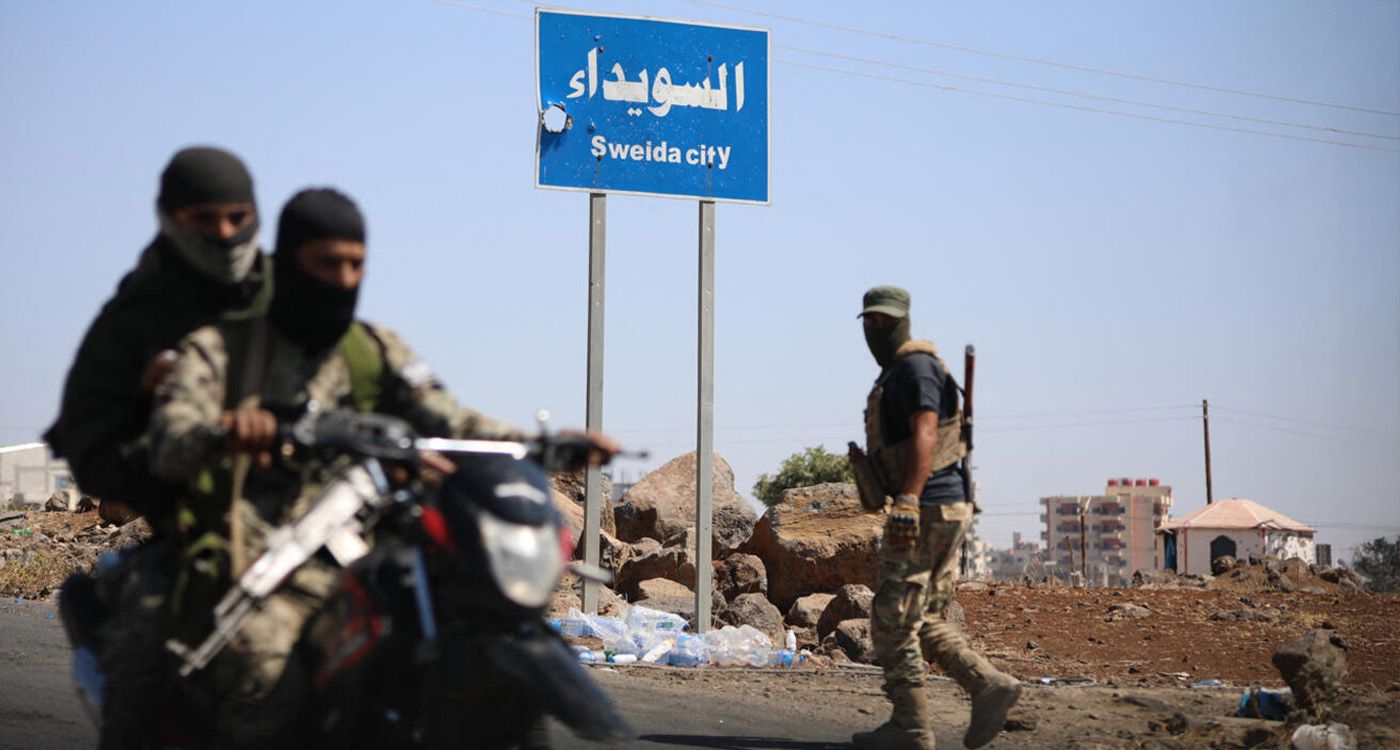
©ABDULAZIZ KETAZ / AFP
Four months after a ceasefire agreement halted a weeklong wave of clashes between Bedouin tribes and Druze fighters in Syria’s southern province of Sweida, insecurity continues to plague the region. The truce, reached on July 19 with U.S. and Jordanian mediation, remains volatile and has been repeatedly violated by renewed outbreaks of violence, including intense fighting in recent days.
This fragile calm has now been further shattered by the deaths of two Druze clerics while in detention on suspicion of collaborating with the regime in Damascus. The incident has sparked anger and outrage among a population already worn down by siege, deprivation, and fear.
According to an informed source in Sweida, clerics Raed al-Matni and Maher Falhout died while in the custody of the “National Guard,” a militia force aligned with religious leader Hikmat al-Hijri, a vocal critic of the new regime under Ahmad al-Sharaa. The group claimed that Matni died from an overdose of his blood pressure medication and that Falhout suffered a cardiac arrest. But the source, who requested anonymity, said the account is widely unconvincing, with the general belief being that the two clerics were tortured to death.
Matni, widely respected in Sweida’s eastern countryside, had been a close associate of Hijri before tensions arose between them following recent violent episodes and the establishment of the National Guard—an initiative he strongly opposed.
When clashes erupted in July between Druze communities and Bedouin tribes, the regime intervened with overwhelming but indiscriminate force. The result was catastrophic: more than 1,000 people were killed, hundreds of civilians among them, and nearly 200,000 residents were displaced. Reports of sectarian abuses by government forces further inflamed tensions, fueling cycles of reprisal and mistrust.
Hostilities erupted after kidnapping incidents occurred, including the abduction of a Druze merchant on 12 July on the Damascus-As-Sweida highway. The situation deteriorated quickly, causing the closure of the highway to Damascus.
As the violence escalated, Israel intervened under the pretext of protecting the Druze minority. Since late 2024, Israel has carried out strikes inside Syria, and during the Sweida crisis, it targeted regime armored units near the province and hit defense installations in Damascus. These interventions created a tense balance of power that persists today, preventing any decisive outcome while deepening the region’s instability.
In the meantime, the Druze community has reorganized its forces. Various armed groups that once operated independently have now united under a single military structure. At the same time, residents have rallied behind al Hijri, issuing clear demands for autonomy and self-governance. Their appeals to Israel and the broader international community reflect a growing sense of existential threat.
On the ground, the situation in Sweida is dire. The province is effectively under siege. Food is scarce and unaffordable for most families. Basic services such as electricity and water are almost entirely absent. Government employees have gone unpaid for months. Humanitarian aid is allowed into the province only in small quantities, tightly controlled by Damascus and insufficient to meet the needs of hundreds of thousands.
Some humanitarian assistance is being funneled from Israel into Sweida, though its scale remains limited and controversial.
The National Guard, which took control of Sweida city following the withdrawal of regime forces as part of the ceasefire, now dominates the city of Sweida and the province’s southern and eastern villages. The northern belt near Damascus is tightly controlled by the regime. Local assessments indicate that around 70 percent of the population supports Hikmat al-Hijri.
However, the deaths of the two clerics have exposed fractures within the Druze community and underscored the volatile power dynamics shaping Sweida’s future. With the province suffering from siege, institutional collapse, and a complex web of local and external actors vying for influence, the risk of renewed large-scale conflict remains high.
As winter approaches and humanitarian needs soar, Sweida stands at a perilous crossroads—its people exhausted, its political landscape fractured, and its future clouded by uncertainty, grief, and the lingering threat of further violence.
Read more

Comments