- 04
- Dec.
- 2025
Basketball – Lebanon Beaten at Home: a Bump In the Road or A Real Warning Sign?
Read : 4 minute(s) A A A
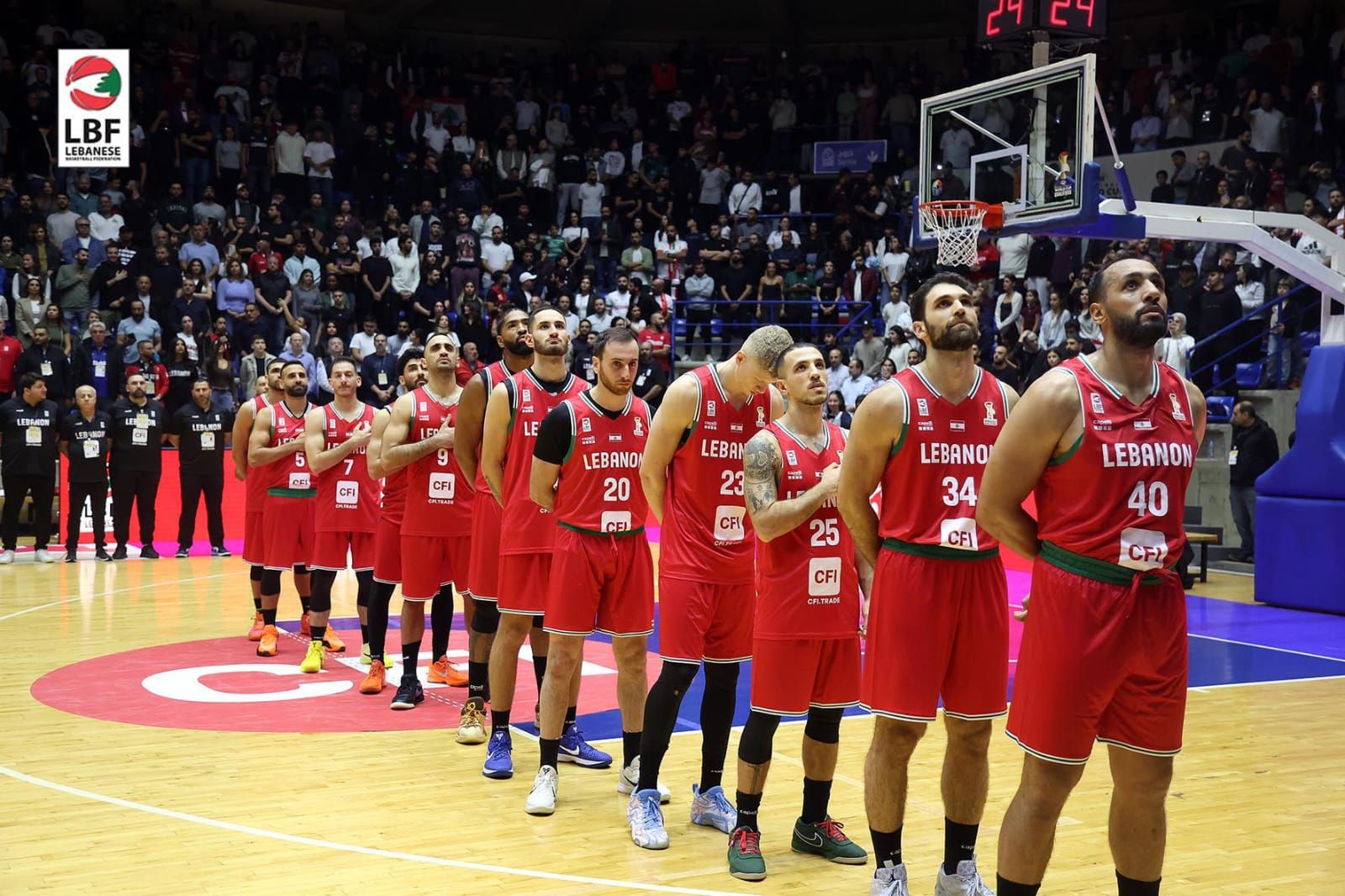
A few days ago, Lebanon suffered a setback as surprising as it was rare: a home defeat in Zouk Mikaël against Qatar, an opponent that, on paper, was largely within its reach. It was Lebanon’s first home loss in qualifiers since 2019, Qatar’s first win in qualifiers since 2018, and its first victory over Lebanon since 2015. More than a simple stumble, this misstep raises questions. Fatigue, complacency, underestimation of the opponent?
For several years, playing Lebanon on its home floor was almost an impossible mission. Since the blowout loss to South Korea on February 23, 2019, Zouk Mikaël had become a true fortress: ten straight qualification wins, across all FIBA competitions. Iraq, Bahrain twice, Indonesia, Jordan, Saudi Arabia, the Philippines, New Zealand, Syria, the UAE—teams of all profiles, ambitious challengers or outsiders, all came through and all left defeated.
During this stretch, Lebanon had conceded only two losses in twelve home games. That statistic had created a certainty: in Zouk Mikaël, the Cedars dictate their rhythm, their toughness, their identity. That the streak ends specifically against Qatar changes the perception. When one of the pillars of your sporting identity is “at home, we don’t lose,” the slightest defeat on your court weighs twice as much.
A Qatari breakthrough that had been building for a while
From afar, Qatar’s victory looks like a massive upset. Lebanon sits 30th in the FIBA rankings, far ahead of Qatar at 87th. The head-to-head history didn’t suggest anything promising for the Qataris either: before this window, Lebanon largely dominated past meetings, and Qatar had not won a qualification game since July 2, 2018, with only two wins total in the entire World Cup 2019 campaign.
But raw numbers don’t tell the full story. In 2025, Qatar had already seriously shaken Lebanon twice. First in the 2025 FIBA Asia Cup qualifiers, with a tight 84–80 that Lebanon escaped with in the final seconds. Then just days before the Zouk Mikaël loss, in the 2027 World Cup qualifiers, with a 75–74 decided on a single possession. In both cases, Lebanon survived by force of will, never truly putting Qatar away.
In that context, Qatar’s win in Zouk Mikaël is not a lightning bolt out of a clear sky but the culmination of a trend. By staying close, pushing games to the wire, and repeatedly threatening the upset, the Qataris finally broke down the door. A team labeled “inferior” does not put itself three times in a row in position to beat the same opponent by accident.
Fatigue, complacency, or underestimation?
Why did Lebanon eventually fall at home? The truth is likely a mix of factors.
First, a slight drop in margin. In recent months, home wins have become narrower—tighter games, shrinking gaps. Opponents no longer step onto the court already feeling beaten. Asian basketball is tightening, and any dip in intensity now costs more.
Then, a sense of mental relaxation. When you stack home victories, it becomes easy to believe the script will always repeat itself: the crowd will lift you, talent will prevail, the opponent will break. Except the two previous clashes with Qatar showed the exact opposite: this team does not let go, even when trailing, even when shaken. Ignoring that is leaving a door open.
Finally, the possibility of underestimation cannot be dismissed. A Qatar already qualified as host nation, ranked far behind, starved of wins in qualifiers, and winless against Lebanon since 2015 in major competition—on paper, it was not the most credible threat to break the streak. And precisely for that reason, it is the kind of opponent a confident team tends to overlook until the scoreboard reminds them that basketball is not played on paper.
And now, what is the value of home-court advantage?
This defeat does not erase the power of Lebanon’s home crowd nor the ten straight wins amassed in Zouk Mikaël. But it changes the outlook.
For opponents, coming to Lebanon is no longer about damage control—it becomes a place where an upset feels possible.
For Lebanon, home-court advantage is no longer an untouchable talisman—it is a capital that must be defended possession after possession.
Qatar, for its part, has checked a major box in its buildup to “its” 2027 World Cup: a foundational victory, against a higher-ranked opponent, in a notoriously hostile arena, after years without a qualification win. The message to the continent is clear: forget the rankings, this team is evolving.
For Lebanon, the question is not whether this loss is catastrophic, but whether it remains just a bump in the road… or the first true warning sign.



Comments