- 04
- Dec.
- 2025
Op-edThe Next Israel–Hezbollah War Could Be Inevitable — and Crippling for Hezbollah
Read : 8 minute(s) A A A
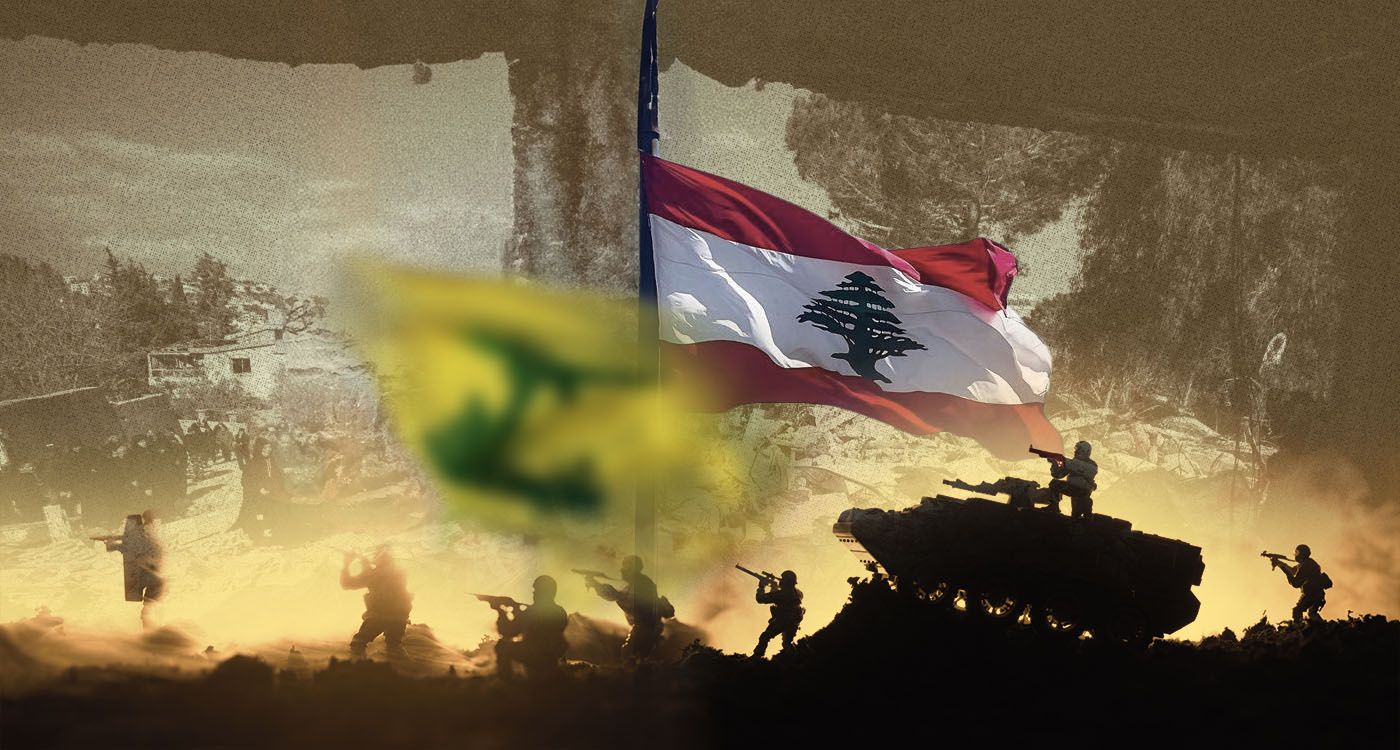
Hezbollah is trapped between its inability to respond militarily to Israel and the growing expectation from its base that it must.
When Israeli jets struck Beirut’s Haret Hreik on 23 November 2025 and killed Haitham Ali Tabatabai, Hezbollah’s chief of staff and the man responsible for rebuilding its shattered military infrastructure, the message was unmistakable. Israel was not simply targeting a militant; it was signaling that the post-war “ceasefire” is dead, that Hezbollah’s rearmament is unacceptable, and that the window for preventing a larger war is closing fast. The strike punctured the final layer of denial in Lebanon: the country has been living under the illusion of a ceasefire that never truly existed.
The 27 November 2024 ceasefire agreement did not restore stability. It froze a conflict Hezbollah had already lost militarily and forced Lebanon to endure a year of low-intensity Israeli strikes that killed more than 300 people, while the Lebanese state stood powerless. Hezbollah responded not by reassessing its strategy or integrating into a national defense framework, but by quietly rebuilding weapons facilities, re-establishing southern positions, and attempting to return to the pre-war status quo where it alone dictates Lebanon’s military posture. Israeli and Western intelligence assessments confirm that Hezbollah has rebuilt a significant portion of its short-range arsenal, though nowhere near its pre-2023 capacity. For Israel, this rebuilding process is precisely what makes another war feel inevitable. For Lebanon, it is what makes the next war unmanageable.
Inside Israel, military officials, analysts, and politicians now speak openly about a limited window to confront Hezbollah before it fully regenerates. Israeli media debates no longer revolve around “if” but “when,” with senior figures arguing that Hezbollah’s weakened state presents an opportunity to strike before the group regains its pre-war deterrent. This mindset, the doctrine of preemption, is what drove the assassination of Tabatabai. Israel sees a weakened Hezbollah, a fractured Lebanon, a distracted Iran, and a favorable regional environment. It believes that waiting increases the cost of the next conflict. According to this logic, escalation is not reckless but calculated.
Hezbollah, by contrast, is trapped in a crisis of its own making. The organization lost thousands of fighters, much of its infrastructure, and key commanders in the 2023–24 war. Its deterrent credibility—the myth that it protects Lebanon—was deeply damaged. Yet rather than acknowledge the consequences of a war it initiated, Hezbollah has spent the past year trying to rebuild its posture while insisting publicly that nothing has changed. It has avoided retaliating against Israeli strikes not out of restraint, but because it cannot afford another confrontation. Its silence is not strategy; it is vulnerability. But vulnerability does not erase Hezbollah’s internal pressure, and that pressure is now erupting into the open.
The clearest illustration of this came in a widely circulated podcast hosted by Hezbollah-aligned commentator Hassan al-Dorr, featuring Ali Hassan Khalil—the powerful deputy of Speaker Nabih Berri. Khalil insisted that Hezbollah leader Hassan Nasrallah had “approved the withdrawal from areas south of the Litani” before his assassination on September 27, 2024, thus framing a forced military retreat as a voluntary, moral decision. Khalil accused rival Lebanese parties, especially the Lebanese Forces, of trying to marginalize the Shia community and vowed that Hezbollah and the Amal Movement, led by Berri, would not accept any political order that diminishes their role. The politician’s tone was defensive, emotional, and deeply revealing: a narrative built not on confidence, but on fear of losing influence.
Khalil’s rhetoric exposes a reality Hezbollah refuses to admit publicly: its base feels exposed, wounded, and suspicious that the regional and domestic environment is shifting against the organization. The insistence that “the Shia are not retreating” and “we do not have suitcases to flee the country” is less a show of strength than a sign of anxiety. Hezbollah’s political environment is no longer unified behind it. Its constituents are demanding strength at a moment when military escalation could be suicidal. Its political allies are warning that any perceived weakness will be exploited by rivals. The party is trapped between its inability to respond militarily and the growing expectation from its base that it must do so.
At the regional level, Hezbollah’s cushion has eroded. The Houthis, once a dependable pressure valve that could attack Israel on Hezbollah’s behalf, were severely degraded by U.S.–U.K. joint strikes. Iran’s strategy is strained by its internal economic crises and the fallout from Israeli operations against its nuclear and military networks. Iraqi militias cannot carry the weight of a confrontation of this scale. For the first time in decades, Hezbollah stands more exposed than protected within the Axis of Resistance. Its margin for proxy escalation has shrunk dramatically. If a war erupts, it will be fought on Lebanon’s soil, not through regional diversification.
Lebanon itself is drifting with no control over its future. The president condemns Israeli strikes but cannot deter them. The prime minister warns of catastrophe but cannot alter Hezbollah’s calculations. The Lebanese Armed Forces remain underfunded and politically constrained. The economy is collapsing at a pace that makes state planning impossible. Lebanon is no longer a state in conflict; it is a battlefield without sovereignty. Decisions that shape its fate are being made in Tel Aviv, Tehran, and Haret Hreik, not in Baabda or the Grand Serail.
Into this unstable moment enters Pope Leo XIV, whose first foreign visit includes Lebanon. His trip, meant as a humanitarian gesture, now risks becoming a symbolic backdrop to escalation. Hezbollah cannot retaliate during the Pope’s visit without taking the blame for derailing diplomacy, yet it also cannot ignore the killing of a senior commander without paying a political price internally. Israel, sensing Hezbollah’s paralysis, may push further before international pressure mounts. The maneuvering room for diplomatic solutions is closing rapidly.
Where Lebanon goes next is painfully clear. The country is heading toward a confrontation that it neither wants nor can survive. Hezbollah’s attempt to preserve its military autonomy has left the state structurally exposed. Israel’s doctrine of preemption has aligned with Hezbollah’s moment of weakness. International actors can issue statements, but none are willing to enforce conditions on the ground. A political settlement is theoretically possible but strategically implausible. A war triggered by miscalculation—a Hezbollah drone, a strike too deep, a retaliatory operation misread—is far more likely.
Hezbollah’s future is equally uncertain. The movement will survive as a political actor; its social base remains large, and its institutions are deeply embedded in the Lebanese structure. But its ability to dominate Lebanon militarily is weakening. Its strategy of fighting Israel without collapsing Lebanon is no longer sustainable. Its narrative of guardianship is being challenged from both inside and outside the Shia community. The next war, if it comes, will likely transform Hezbollah more than it transforms Israel. It could emerge diminished, fragmented, or forced to accept constraints it once rejected. The Israel–Hezbollah dynamic that defined Lebanon for two decades is entering a new phase in which Hezbollah’s power is no longer expanding but contracting.
Lebanon stands at a crossroads shaped by forces beyond its control. Whether it steps into 2026 under a fragile ceasefire or into the ruins of another war depends on whether Hezbollah and Israel can resist the logic that both have internalized: that waiting makes things worse. Right now, neither side seems willing to step back. And Lebanon, exhausted and leaderless, is being dragged toward a confrontation that could reshape the entire region and redefine Hezbollah’s place within it.


Comments