- Home
- Highlights
- Pope Leo’s Speech During Interfaith Dialogue
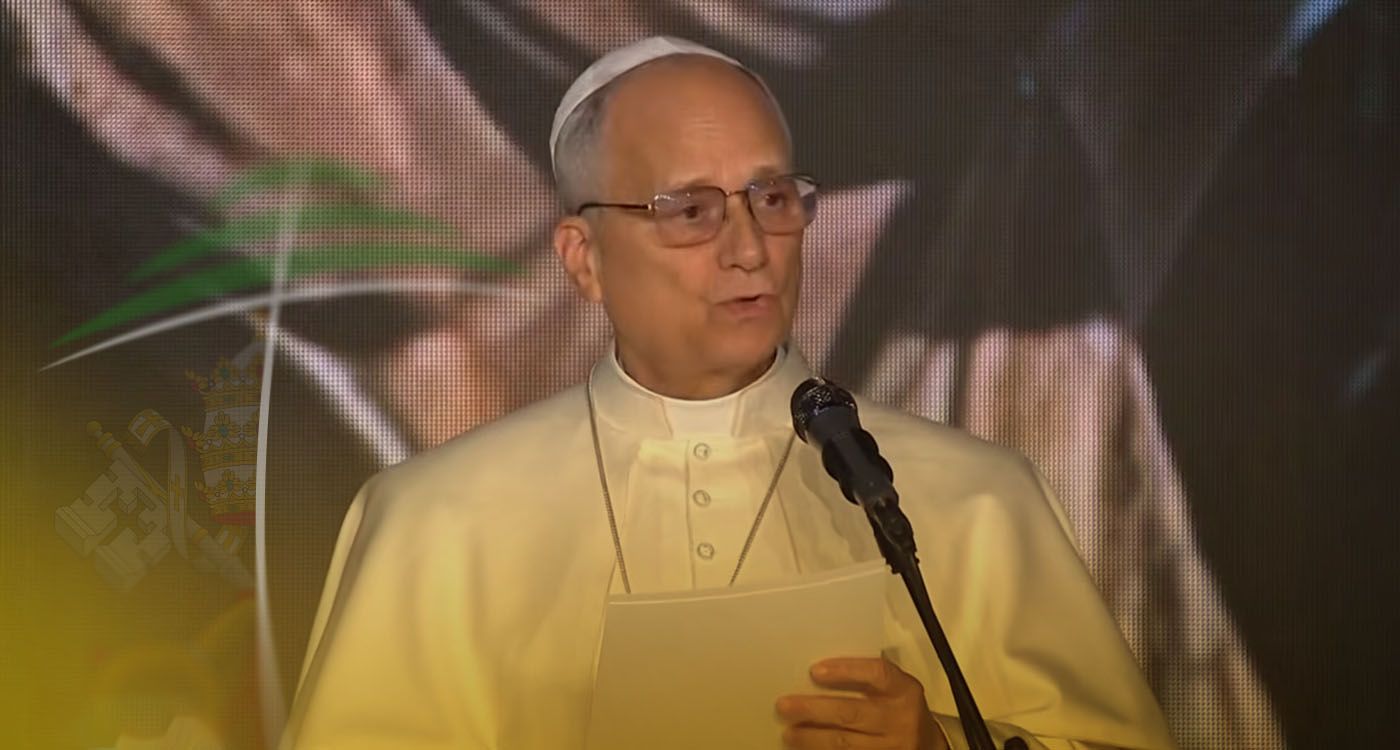
Pope Leo XIV delivered a speech on Monday in Martyrs’ Square, during the interfaith dialogue meeting, one of the key stops of his three-day visit in Lebanon.
Dear brothers and sisters,
I am deeply moved and immensely grateful to stand among you today, in this blessed land—a land exalted by the prophets of the Old Testament, who beheld in its towering cedars emblems of the righteous soul that flourishes beneath heaven’s vigilant gaze; a land where the echo of the Logos has never fallen silent but continues to call forth, from century to century, those who desire to open their hearts to the living God.
In his Post-Synodal Apostolic Exhortation Ecclesia in Medio Oriente, signed here in Beirut in 2012, Pope Benedict XVI emphasized that “[t]he Church’s universal mission calls her to dialogue with followers of other religions. In the Middle East, this dialogue draws on the deep spiritual and historical connections between Christians, Jews, and Muslims. It is a dialogue guided not by political or social interests, but by profound theological truths rooted in faith” (n. 19). Dear friends, your presence here today, in this remarkable place where minarets and church bell towers stand side by side, yet both reach skyward, testifies to the enduring faith of this Land and the steadfast devotion of its people to the one God.
Here in this beloved land, may every bell toll, every adhān, and every call to prayer blend into a single, soaring hymn—not only to glorify the merciful Creator of heaven and earth, but also to lift a heartfelt prayer for the divine gift of peace. For many years, and especially in recent times, the eyes of the world have been fixed on the Middle East, the cradle of the Abrahamic religions, observing the arduous journey and the unceasing quest for the precious gift of peace. At times humanity looks at the Middle East with a sense of trepidation and disheartenment, in the face of such complex and longstanding conflicts.
Yet, in the midst of these struggles, a sense of hopefulness and encouragement can be found when we focus on what unites us: our common humanity, and our belief in a God of love and mercy. In an age when coexistence can seem like a distant dream, the people of Lebanon, while embracing different religions, stand as a powerful reminder that fear, distrust and prejudice do not have the final word and that unity, reconciliation, and peace are possible. It is a mission that remains unchanged throughout the history of this beloved land: to bear witness to the enduring truth that Christians, Muslims, Druze, and countless others can live together and build a country united by respect and dialogue. Sixty years ago, the Second Vatican Council, with the promulgation of the Declaration Nostra Aetate, opened a new horizon for encounter and mutual respect between Catholics and people of different religions, emphasizing that true dialogue and collaboration are rooted in love—the only foundation for peace, justice, and reconciliation. This dialogue, inspired by divine love, should embrace all people of goodwill, reject prejudice, discrimination and persecution, and affirm the equal dignity of every human being. Though the public ministry of Jesus unfolded chiefly in Galilee and Judea, the Gospels also recount episodes where he visited the region of the Decapolis—most notably in the environs of Tyre and Sidon—where he encountered the Syro-Phoenician woman whose unwavering faith moved him to heal her daughter (cf. Mark 7:24-30).
Here, the land itself becomes more than a mere site of encounter between Jesus and a pleading mother; it becomes a place where humility, trust, and perseverance overcome all barriers and meet God’s boundless love that embraces every human heart. Indeed, this is “the very core of interreligious dialogue itself: the discovery of God’s presence beyond all boundaries and the invitation to seek him together with reverence and humility.” 1. If Lebanon is renowned for its majestic cedars, the olive tree too stands as a cornerstone of its heritage. The olive tree not only adorns this space in which we gather today, but it is also revered in the sacred texts of Christianity, Judaism, and Islam, serving as a timeless symbol of reconciliation and peace. Its long life and remarkable ability to flourish even in the harshest environments symbolize endurance and hope, reflecting the steadfast commitment required to nurture peaceful coexistence.
From this tree flows oil that heals—a balm for physical and spiritual wounds—manifesting the boundless compassion of God for all who suffer. Its oil also provides light, serving as a reminder of the call to illuminate our hearts through faith, charity, and humility. As the roots of the cedars and olive trees delve deep and spread wide across the earth, so too the Lebanese people are scattered throughout the world, yet bound together by the enduring strength and timeless heritage of your homeland. Your presence here and across the globe enriches the world with your multi-millennial heritage, but it also represents a vocation. In an ever more interconnected world, you are called to be builders of peace: to confront intolerance, overcome violence, and banish exclusion, illuminating the path toward justice and concord for all, through the witness of your faith. Dear Brothers and Sisters, on 25 March each year, celebrated as a national holiday in your country, you come together to venerate Mary, Our Lady of Lebanon, honored in her sanctuary at Harissa, which is adorned with an impressive statue of the Virgin with outstretched arms, embracing all the Lebanese people. May this loving and maternal embrace of the Virgin Mary, Mother of Jesus and Queen of Peace, guide each of you so that in your homeland, across the Middle East, and throughout the world, the gift of reconciliation and peaceful coexistence may flow forth “like the streams flowing from Lebanon” (cf. Song of Songs 4:15), bringing hope and unity to all.
Read more
Comments